



Introduction: GenAI Is Only as Smart as the Data Behind It
Generative AI is reshaping every industry—automating content creation, powering intelligent assistants, accelerating decisions, and unlocking new business models. But behind the excitement lies a hard truth that many enterprises overlook:
Your GenAI strategy will fail—quietly or catastrophically—if your foundational data is ungoverned, inconsistent, or incomplete.
In 2025, GenAI is no longer a “lab experiment.” Enterprises are deploying AI copilots, customer-facing chatbots, workflow intelligence, and real-time insights. All of these systems rely on accurate, compliant, governed enterprise data.
When governance is weak:
- AI hallucinations increase
- Model outputs become biased or misleading
- Security and compliance risks grow
- Workflow automations break
- Customer experience degrades
- Trust in GenAI drops across business teams
Strong data governance is not optional—it is the structural foundation that makes GenAI reliable, safe, and scalable.
Why Poor Data Governance Breaks GenAI—Every Time
1. GenAI Amplifies Your Bad Data
GenAI learns from the data it’s given. If product attributes are inconsistent, customer records are duplicated, or supplier data is incomplete, GenAI will produce:
- Incorrect customer responses
- Wrong recommendations
- Broken automations
- Faulty insights
❗ Bad data doesn’t stay small—it becomes exponentially more damaging when GenAI scales it.
2. Unclear Data Ownership = Confusion in AI Pipelines
GenAI models require clear, governed, documented data flows. Yet many enterprises still lack:
- Defined data owners and domain stewards
- Stewardship accountability
- Consistent metadata and business glossaries
- End-to-end lineage
Without ownership and stewardship, data issues linger and no one feels accountable for fixing them—creating opaque AI pipelines and inconsistent outputs.
3. Regulatory & Compliance Failures Become Enterprise Risks
As GenAI interacts with customer, employee, clinical, or financial data, compliance requirements tighten:
- GDPR / CCPA
- HIPAA and healthcare regulations
- Financial and sector-specific data retention and audit policies
Global guidance from organizations like the OECD and industry research show that weak governance significantly increases privacy, data-leakage, and regulatory risk in AI systems. 1
Without governance, sensitive data can unintentionally enter training sets, vector stores, or prompts—leading to legal, ethical, and financial consequences.
4. AI Hallucinations Become More Harmful Without High-Quality Reference Data
Hallucinations often spike when:
- Data is incomplete or outdated
- Context is missing or contradictory
- Master data is inconsistent across systems
Recent research and risk-management guidance highlight hallucinations as one of the top operational risks for GenAI in enterprises—especially in regulated domains. 2
Good governance and strong Master Data Management (MDM) ensure that AI has trusted, unified reference data, which reduces the likelihood and impact of hallucinations and improves reliability.
5. Lack of Governance Makes AI Outputs Impossible to Explain
Modern GenAI systems must justify their outputs—especially for regulated industries. But without:
- Data lineage
- Versioning
- Model documentation
- Audit trails
- Approval workflows
…it becomes impossible to explain or defend what the model did.
Governance provides the transparency GenAI requires.
The Fix: A Governance-Driven Foundation for GenAI
1. Start with Master Data Management (MDM)
MDM creates unified, deduplicated, accurate master records across:
- Customer
- Product
- Supplier
- Asset
- Location
- Employee
GenAI maturity depends on MDM maturity.
Enterprises that skip MDM consistently struggle with unreliable AI.
2. Implement AI-Ready Data Governance
Governance must evolve beyond static policies to support real-time GenAI ecosystems:
- Domain-based data ownership and stewardship
- Dynamic access policies and controls
- Enterprise data catalog + business glossary
- Data trust scoring and quality rules
- Sensitive-data tagging and masking
- Automated approvals and policy workflows
This kind of operational governance reduces risk and ensures models access high-quality, appropriate, and compliant data.
3. Build Lineage, Observability & Transparency
GenAI systems should be able to answer:
- Where did this data originate?
- Who touched or transformed it?
- How did it move through pipelines?
- Which models or prompts used it?
- What outputs and decisions did it drive?
Data observability and lineage tooling let teams detect issues—like schema changes, drift, or quality drops—before GenAI magnifies them across channels. 3
4. Integrate Governance Into the GenAI Lifecycle
Governance isn’t a one-time step; it must be integrated across:
- Data ingestion & preparation
- Feature engineering and vectorization
- Model training and fine-tuning
- Prompt pipelines and RAG flows
- Model monitoring and feedback loops
- Output review, retention, and access
Leading AI-governance frameworks now recommend lifecycle-wide controls, rather than point-in-time approvals. 4
5. Establish Clear Human-in-the-Loop Controls
AI should not operate unchecked—especially for high-stakes or high-impact use cases.
Governed AI means:
- Humans validate sensitive or high-risk decisions
- Exceptions are automatically flagged
- Risk-based thresholds trigger manual review
- Policies define when AI can (and cannot) act autonomously
This combination of automation plus human oversight is central to most modern GenAI risk-management recommendations. 5
How Apptad Helps Enterprises Build Governance-Ready GenAI
Apptad supports organizations with a governance-first GenAI approach:
1. AI-Ready Data Governance Frameworks
Ownership models, policy design, lineage mapping.
2. Master Data Management Accelerators
Customer 360, product master, supplier master, compliance-driven MDM.
3. Data Quality & Observability
AI-driven rules, scoring, anomaly detection.
4. Governed GenAI Enablement
Prompt governance, RLHF frameworks, LLMOps, compliance monitoring.
5. Strong Ecosystem Partnerships
Reltio, Informatica, Databricks, Snowflake.
6. Faster Time-to-Value
Pre-built connectors, automation, and templates.
A Practical Framework: Is Your Organization Ready for GenAI?
Your GenAI strategy is likely at risk if you answer “No” to any of these:
- Do we trust the data powering our AI models?
- Do we know exactly where the data comes from (lineage)?
- Do we have clear domain owners and stewards?
- Are our master data domains clean, unified, and governed?
- Can we demonstrate compliance for AI inputs and outputs?
- Do we have processes to monitor drift, bias, and anomalies in AI behaviour?
If not, your GenAI investments may fail quietly (poor decisions, low adoption) or publicly (compliance issues, reputational damage)—a pattern repeatedly highlighted in recent AI-risk surveys. 6
Conclusion: Governance Isn’t the Last Step—It’s the First
A strong GenAI strategy does not start with models.
It starts with:
- Clean, governed master data
- Transparent, enforceable data governance
- Defined domain ownership and stewardship
- Robust observability and lineage
- Built-in privacy, security, and compliance controls
Enterprises that invest in governance build GenAI systems that are accurate, explainable, compliant, and scalable. Those that skip it experience AI failure—no matter how advanced their models or platforms appear.
Building RDM Update Agents with Reltio AgentFlow
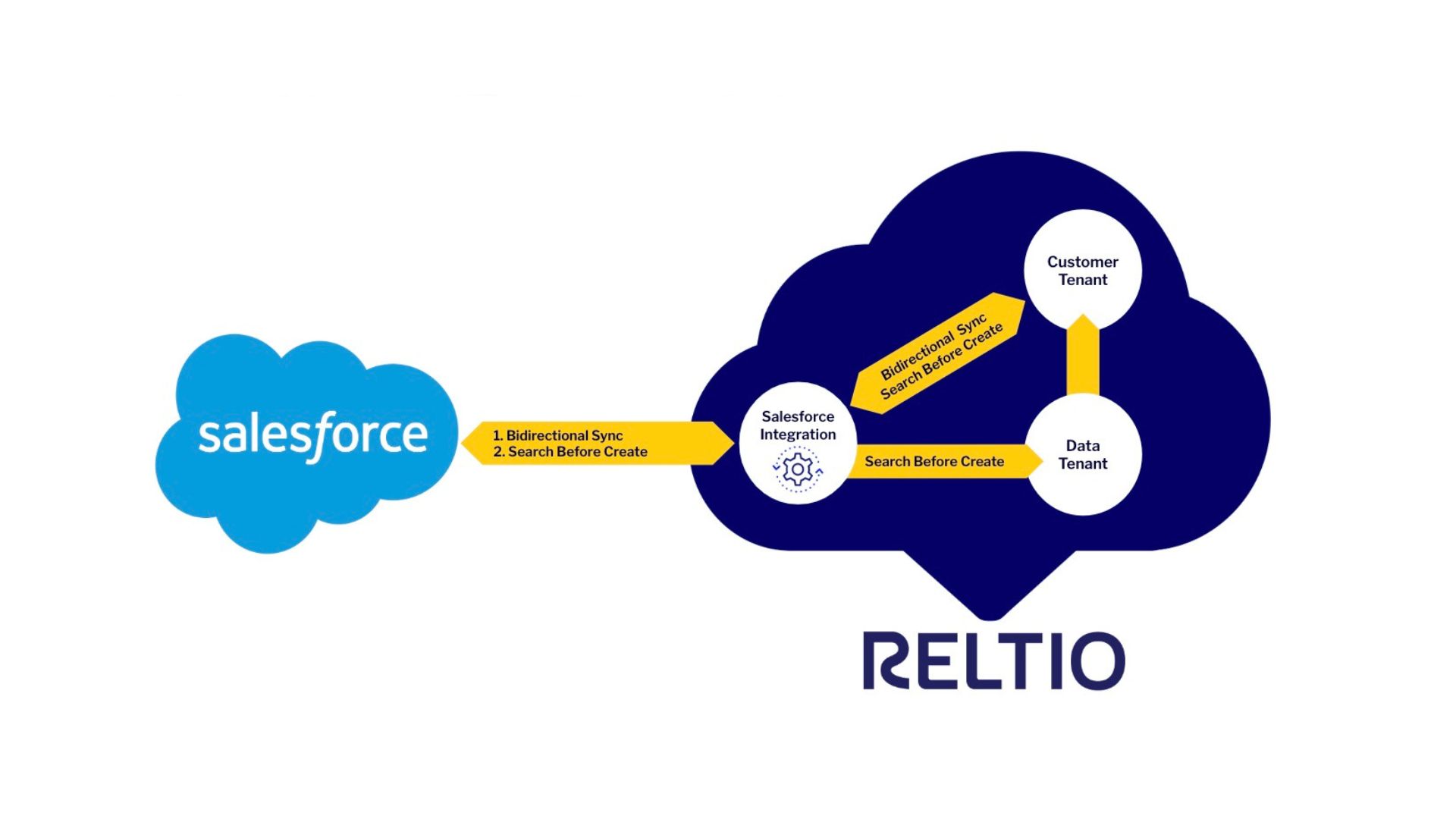
Reltio Integration for Salesforce : Search Before Create, Architecture, Configuration, and Enterprise Data Strategy

Automating Data Quality with Reltio Agentflow: A Smarter Approach to Master Data Management

From Data Mesh to Data Fabric: Choosing the Right Decentralized Architecture for Your Enterprise

Building a DataOps Culture: Accelerating Data Delivery Through Automation and Collaboration