



Introduction: AI Strategy Is Broken—But Not Where You Think
In 2026, enterprises are not struggling to adopt AI—they’re struggling to make it work.
Despite massive investments in generative AI and agentic systems, most organizations fail to scale beyond initial pilots. The issue is not ambition or technology. It’s execution.
And the root cause is becoming increasingly clear:
AI strategies fail because data is not treated like a product.
Most organizations still manage data as a byproduct of operations. But in an AI-driven world, that approach no longer works. Data must be engineered, owned, and delivered with the same rigor as a product—complete with accountability, quality standards, and measurable business value.
What Is a Data Product (And Why It Matters)
A data product is far more than just a dataset. It is a structured, reusable, and governed asset designed to deliver a specific business outcome.
At its core, a data product includes:
- The data itself
- Metadata and context
- Pipelines and transformations
- Governance policies
- Access controls
What differentiates it is not just its components, but how it is managed. A data product has clear ownership, defined lifecycle management, and measurable performance—just like any other business product.
This transforms data from something passive into something usable, scalable, and valuable.
The 2026 Reality: AI Is Outpacing Data Maturity
Across industries, a clear pattern is emerging. AI adoption is accelerating rapidly, but data maturity is lagging behind.
Organizations are investing heavily in AI capabilities, yet they continue to face persistent challenges:
- Poor data quality
- Fragmented systems
- Lack of governance
At the same time, AI itself is evolving.
It is no longer just analyzing data. It is:
- Acting on it
- Automating decisions
- Driving operations
This shift—from insight to execution—changes everything.
AI systems now require trusted, real-time, and context-rich data to function effectively. Without that, even the most advanced models struggle to deliver value.
The Problem: Data Without Product Thinking
Most enterprises still operate with a traditional approach to data.
In this model:
- Data is owned primarily by IT, not business teams
- Documentation is limited or inconsistent
- Accessibility is restricted or fragmented
- Accountability for quality is unclear
- Systems are built for reporting—not AI
The result is predictable. Organizations face conflicting metrics, broken pipelines, and low trust in data. Over time, this leads to stalled AI initiatives and failed outcomes.
The Shift: From Data Assets to Data Products
The data product mindset introduces a fundamental shift in how organizations approach data.
Instead of treating data as a static asset, it is managed as a dynamic, value-driven product.
In this model:
- Data is owned by domain teams
- Built around specific use cases
- Governed by design
- Continuously improved
- Measured based on business impact
This aligns directly with the needs of modern AI systems.
Because AI does not just need data—it needs:
- Context
- Consistency
- Reliability
Why AI Strategy Fails Without a Data Product Mindset
A successful AI strategy in 2026 is not defined by how much data you have, but by how effectively that data is structured and delivered.
Without a data product mindset, even the most advanced AI systems struggle to create value.
1. AI Needs Context—Not Just Data
Modern AI systems, especially generative and agentic AI, require semantic understanding and business context. Raw data alone is not sufficient.
Without well-defined data products:
- Outputs become inconsistent
- Insights lose relevance
- Decision-making weakens
2. AI Needs Trustworthy Data at Scale
AI systems operate at scale, which means they amplify whatever data they receive.
If the data is fragmented or inconsistent, errors scale with it.
Data products address this by embedding:
- Quality rules
- Governance policies
- Standard definitions
This ensures reliability across the organization.
3. AI Needs Continuous Evolution
AI systems are not static—they require ongoing updates, retraining, and monitoring.
Data products enable this through:
- Versioning
- Observability
- Lifecycle management
This ensures that AI systems remain aligned with changing business conditions.
4. AI Needs Clear Ownership
One of the most common reasons AI initiatives fail is simple: no one owns the data.
A data product approach introduces:
- Domain ownership
- Clear accountability
- Defined SLAs for quality
This ensures faster resolution of issues and stronger alignment with business goals.
The Rise of AI-Native Data Products (2026 Trend)
In 2026, data products are evolving into something more advanced: AI-native data products.
These are specifically designed for AI consumption. They are enriched with semantic meaning and optimized for both human and machine use.
They enable:
- AI agents
- Real-time decision systems
- Autonomous workflows
This is becoming the foundation for:
- Agentic AI
- Autonomous enterprises
In many modern architectures, AI systems can now discover and interact with data products dynamically, enforcing governance and context in real time.
From Insights to Execution: The New AI Paradigm
AI is undergoing a fundamental shift.
It is moving from:
- Generating insights
To:
- Driving actions
This means AI is no longer just recommending what should be done—it is executing decisions.
We already see this in real-world applications:
- Supply chains adjusting automatically to demand
- Fraud detection systems acting in real time
- AI agents handling customer interactions autonomously
To support this level of execution, AI systems require:
- Reliable, real-time data inputs
- Standardized outputs
- Seamless interoperability
Data products provide this foundation.
The Business Case: Why This Matters
The shift to a data product mindset is not just technical—it has direct business impact.
Faster Time to Value
Data products reduce the time required to discover, prepare, and use data, enabling faster AI deployment.
Scalable AI Systems
Instead of building new pipelines for every use case, teams can reuse standardized data products, improving efficiency and scalability.
Improved AI ROI
As AI investments come under greater scrutiny, organizations must demonstrate measurable outcomes. Data products enable this by embedding observability and traceability into the data layer.
Better Governance and Compliance
With increasing regulatory pressure, governance is essential. Data products embed access control, policy enforcement, and compliance directly into the system.
How to Build a Data Product Mindset
Adopting this approach requires both structural and cultural change.
1. Start with Business Use Cases
Focus on outcomes such as customer intelligence, risk modeling, or forecasting—not just data availability.
2. Assign Ownership
Every data product should have a clearly defined owner responsible for quality and performance.
3. Build Reusable Assets
Shift from one-off pipelines to standardized, reusable data products.
4. Define Data Contracts
Establish clear expectations around structure, quality, and usage to ensure consistency.
5. Enable Discoverability
Ensure data products are easily accessible through catalogs and platforms.
6. Continuously Improve
Monitor usage, quality, and performance—and refine based on feedback and evolving needs.
Common Mistakes to Avoid
Organizations often struggle during this transition due to a few recurring pitfalls.
Treating data products purely as a technical initiative is one of the biggest mistakes. This is not just a data engineering problem—it is a business transformation.
Another common issue is trying to build too many data products at once. The focus should be on high-impact use cases, not volume.
Ignoring governance is equally risky. Without it, trust in data products erodes quickly, and AI systems fail.
Finally, overcomplicating the technology stack can slow progress. In 2026, the trend is clear: simpler, integrated systems deliver more value than fragmented toolsets.
The Future: Data Products Will Define AI Economies
As AI continues to evolve, data products will become the core unit of value within organizations.
They will:
- Power AI models
- Feed decision systems
- Enable automation
Organizations that adopt this mindset will:
- Move faster
- Scale more effectively
- Deliver measurable AI outcomes
Final Thought
If your AI strategy today focuses primarily on models, tools, and infrastructure, you are solving the wrong problem.
Because in 2026:
The winners in AI are not those with the best algorithms—
but those with the best data products.
The shift to a data product mindset is not optional. It is the foundation for turning AI from an experimental capability into a scalable, profitable reality.

From Data Lakes to AI Lakes: The Next Evolution in Enterprise Architecture

The Hidden Cost of Bad Data in AI: A CFO’s Perspective

AI Doesn’t Fail. Data Does: The Real Reason AI Projects Collapse
Building RDM Update Agents with Reltio AgentFlow
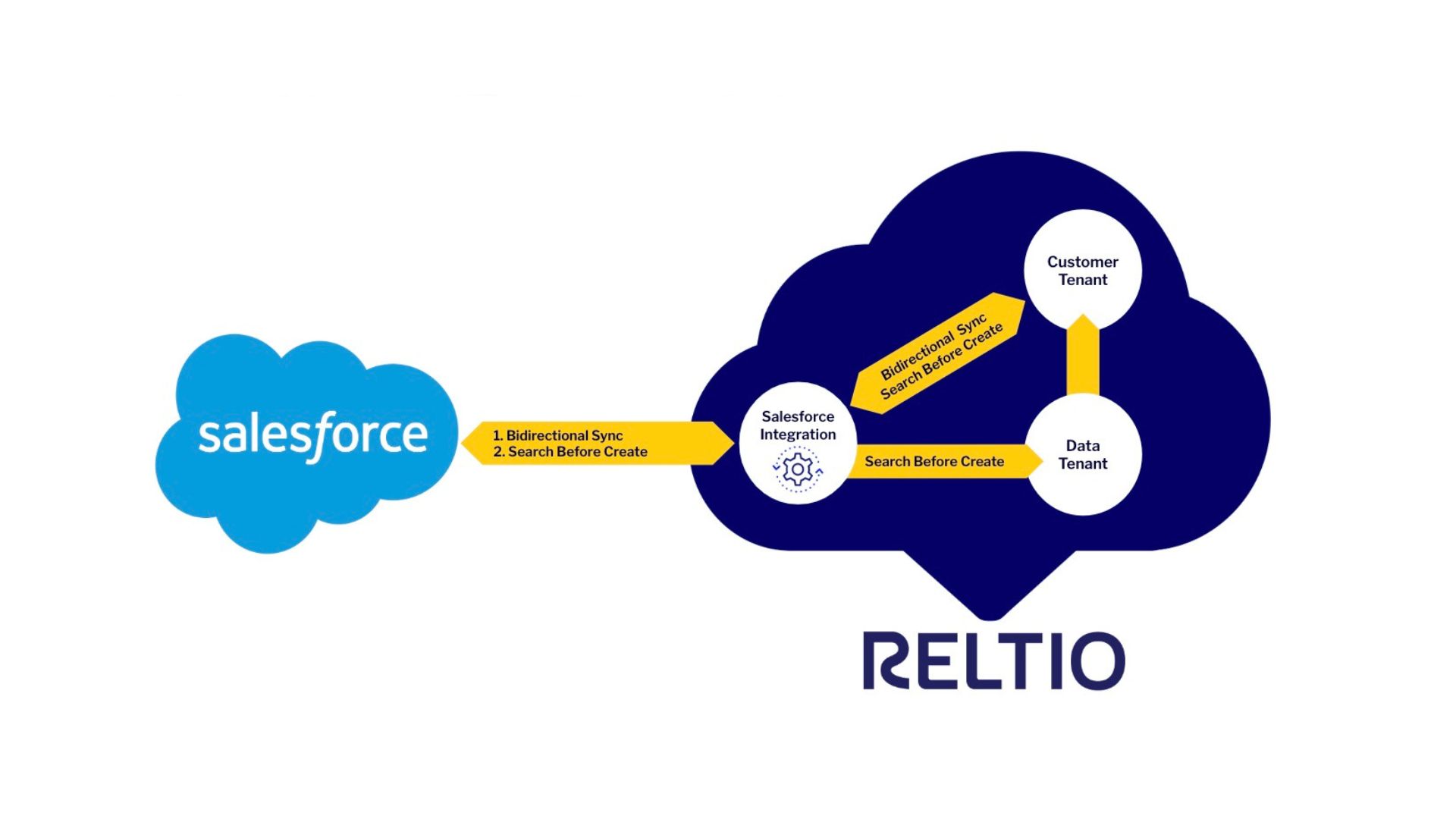
Reltio Integration for Salesforce : Search Before Create, Architecture, Configuration, and Enterprise Data Strategy