



Artificial intelligence has moved from experimentation to expectation in the enterprise. Boards and executive teams increasingly view AI as a strategic lever for productivity, growth, and differentiation. Yet many organizations find that AI initiatives stall after early pilots. The issue is rarely model performance or tooling maturity. More often, it is the enterprise core itself.
For most organizations, the AI journey should begin not with algorithms, but with enterprise core modernization.
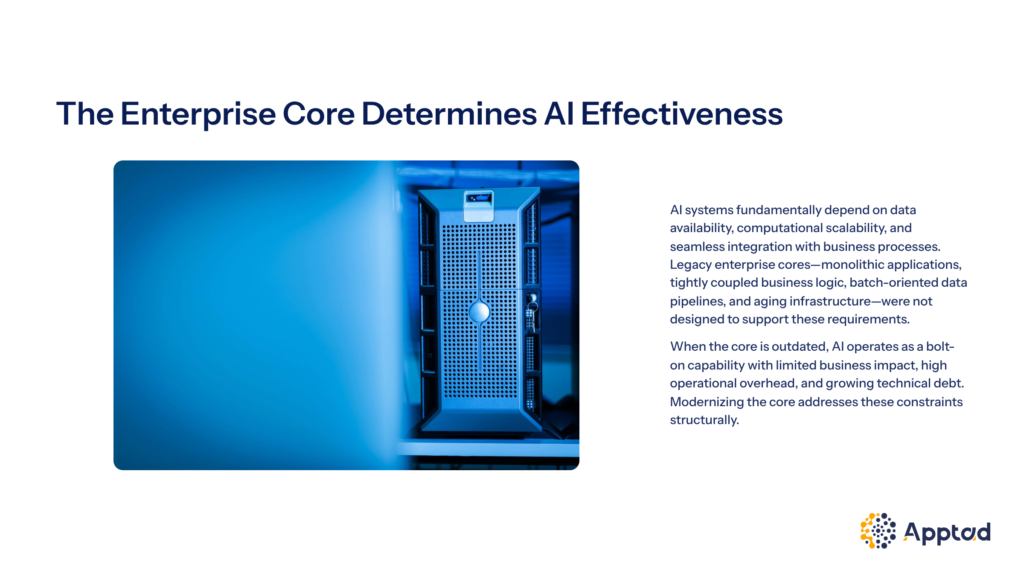
The Enterprise Core Determines AI Effectiveness
AI systems are fundamentally dependent on data availability, computational scalability, and seamless integration with business processes. Legacy enterprise cores—monolithic applications, tightly coupled business logic, batch-oriented data pipelines, and aging infrastructure—were not designed to support these requirements.
When the core is outdated, data is fragmented and slow-moving, business rules are buried deep in application code, and system changes carry significant risk. In such environments, AI is forced to operate as a bolt-on capability. The result is limited business impact, high operational overhead, and growing technical debt.
Modernizing the core addresses these constraints structurally rather than tactically.
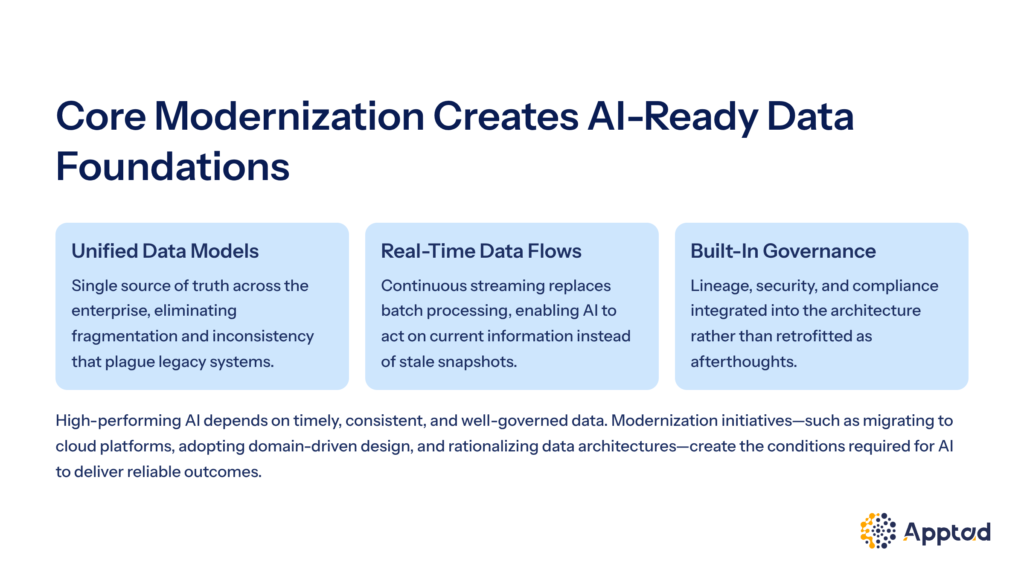
Core Modernization Creates AI-Ready Data Foundations
High-performing AI depends on timely, consistent, and well-governed data. Core modernization initiatives—such as migrating to cloud platforms, adopting domain-driven design, and rationalizing data architectures—create the conditions required for AI to deliver reliable outcomes.
A modern core enables unified data models, real-time data flows, and scalable data platforms. Governance, lineage, and security are built into the architecture rather than retrofitted. As a result, AI models can access trusted data streams without extensive manual preparation, reducing both risk and time to value.
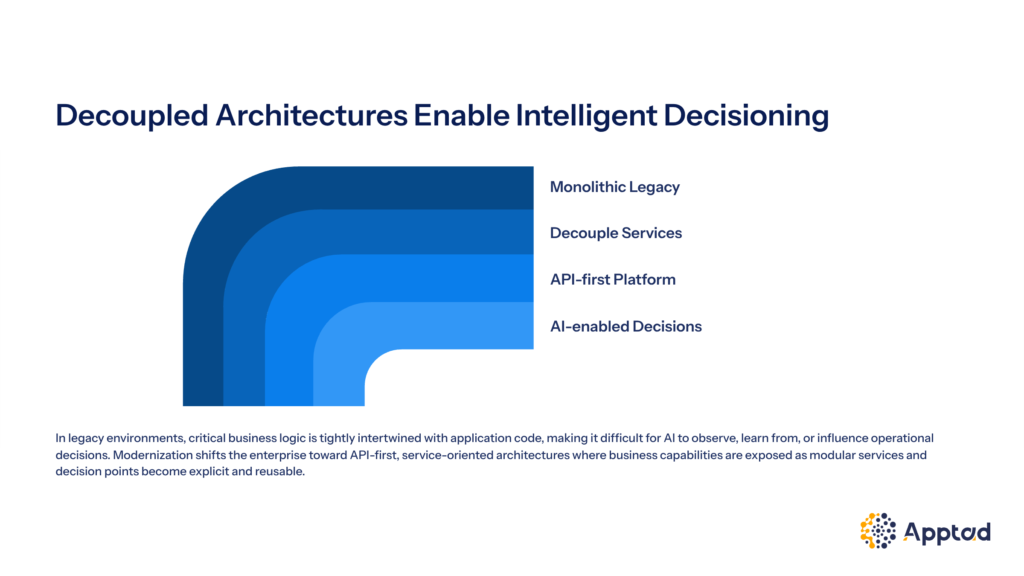
Decoupled Architectures Enable Intelligent Decisioning
In many legacy environments, critical business logic is tightly intertwined with application code. This makes it difficult for AI systems to observe, learn from, or influence operational decisions.
Modernization shifts the enterprise toward API-first, service-oriented architectures where business capabilities are exposed as modular services. Decision points become explicit and reusable. In this context, AI can move beyond descriptive analytics and into real-time decision support and automation, influencing outcomes directly within core workflows rather than sitting alongside them.
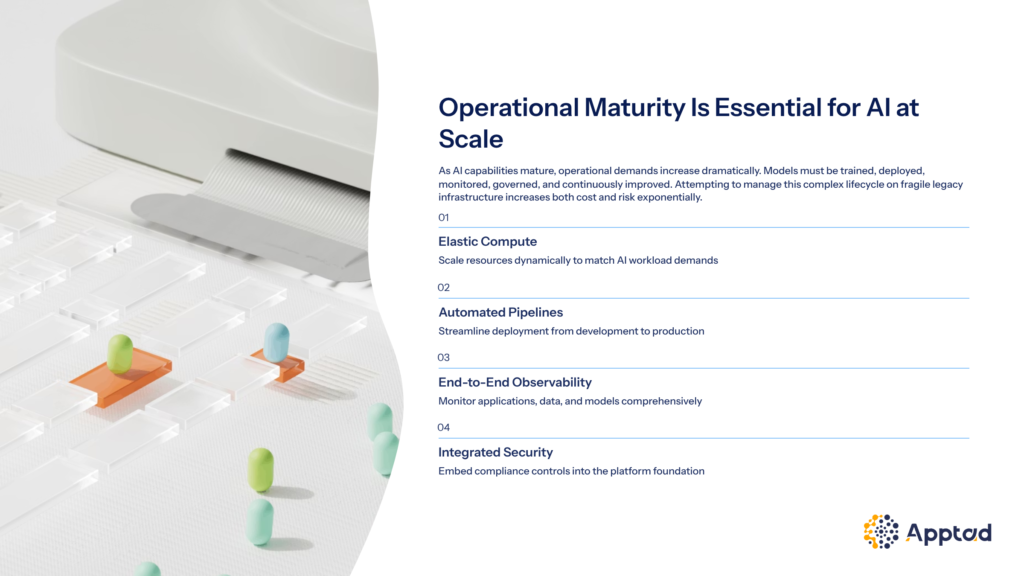
Operational Maturity Is Essential for AI at Scale
As AI capabilities mature, operational demands increase. Models must be trained, deployed, monitored, governed, and continuously improved. Attempting to manage this lifecycle on fragile legacy infrastructure increases cost and risk.
A modern enterprise core provides elastic compute, automated deployment pipelines, and end-to-end observability across applications, data, and models. Security and compliance controls are integrated into the platform, enabling AI to scale responsibly and reliably. This operational maturity is a prerequisite for embedding AI into mission-critical processes.
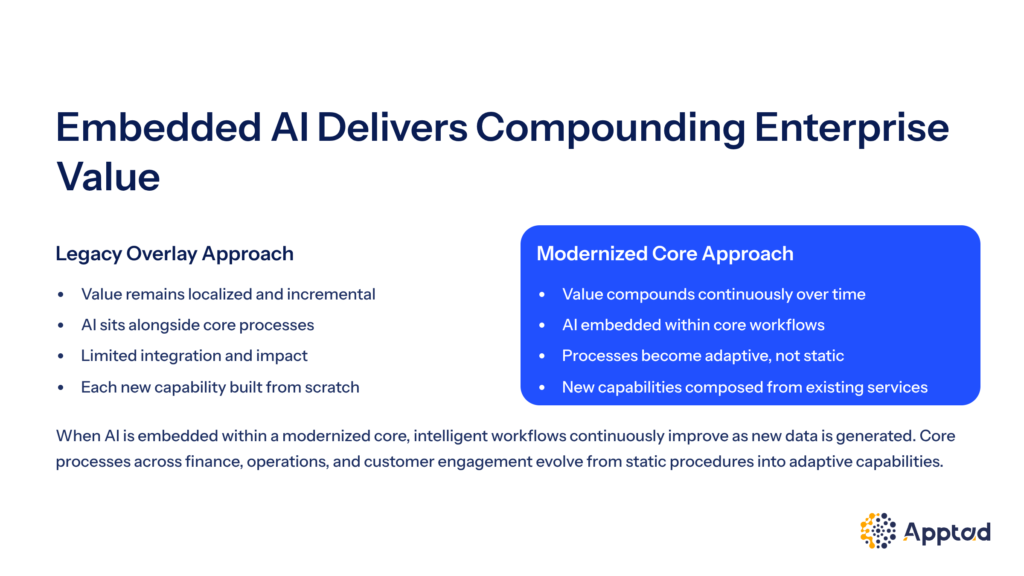
Embedded AI Delivers Compounding Enterprise Value
When AI is implemented as an overlay on legacy systems, value tends to be localized and incremental. In contrast, when AI is embedded within a modernized core, value compounds over time.
Intelligent workflows continuously improve as new data is generated. Core processes across finance, operations, and customer engagement become adaptive rather than static. Innovation accelerates as new AI capabilities are composed from existing services instead of built from scratch.
In this model, AI becomes part of the enterprise’s operating fabric rather than a standalone initiative.
Modernization Lowers the True Cost of AI
Organizations often underestimate the hidden costs associated with AI initiatives, including data preparation, integration complexity, exception handling, and ongoing model maintenance. These costs escalate rapidly in legacy environments.
By modernizing the core first, enterprises reduce friction across the AI lifecycle. Data becomes easier to access and interpret, integrations become more standardized, and governance becomes more transparent. The result is a lower total cost of ownership and a significantly higher return on AI investments.
A Sequenced Approach to Sustainable AI Transformation
Starting with core modernization does not mean delaying AI adoption. The most successful enterprises modernize and enable AI in parallel, with clear sequencing. They stabilize and modernize foundational systems, expose high-value data and processes through clean interfaces, and then deploy AI where it directly enhances core workflows. Over time, AI becomes a governed, scalable capability of the enterprise platform.
Conclusion
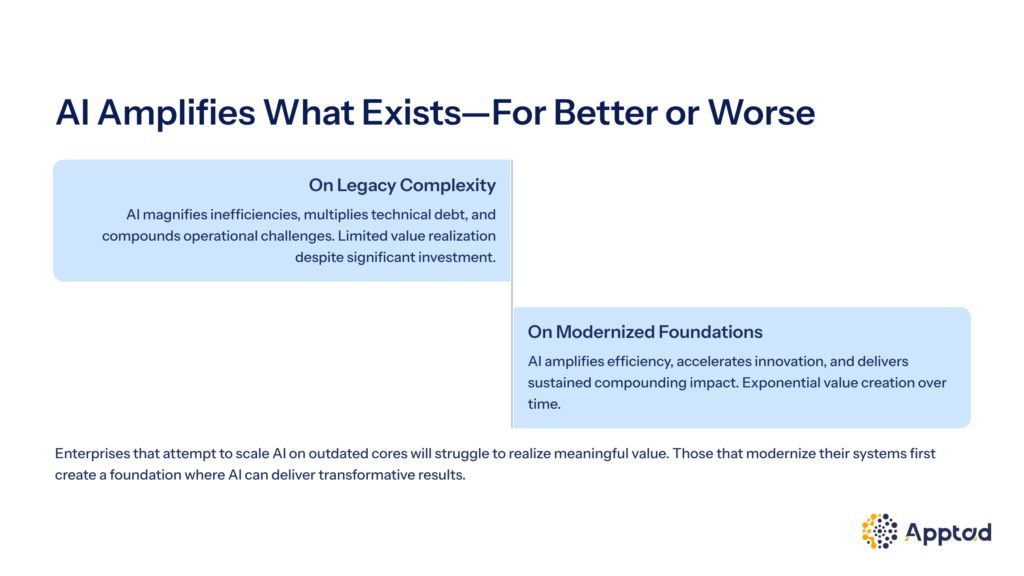
AI does not compensate for legacy complexity—it amplifies it. Enterprises that attempt to scale AI on outdated cores will struggle to realize meaningful value. Those that modernize their core systems first create a foundation where AI can deliver sustained, compounding impact.
Enterprise core modernization is not a detour on the AI journey. It is the starting line.
Building RDM Update Agents with Reltio AgentFlow
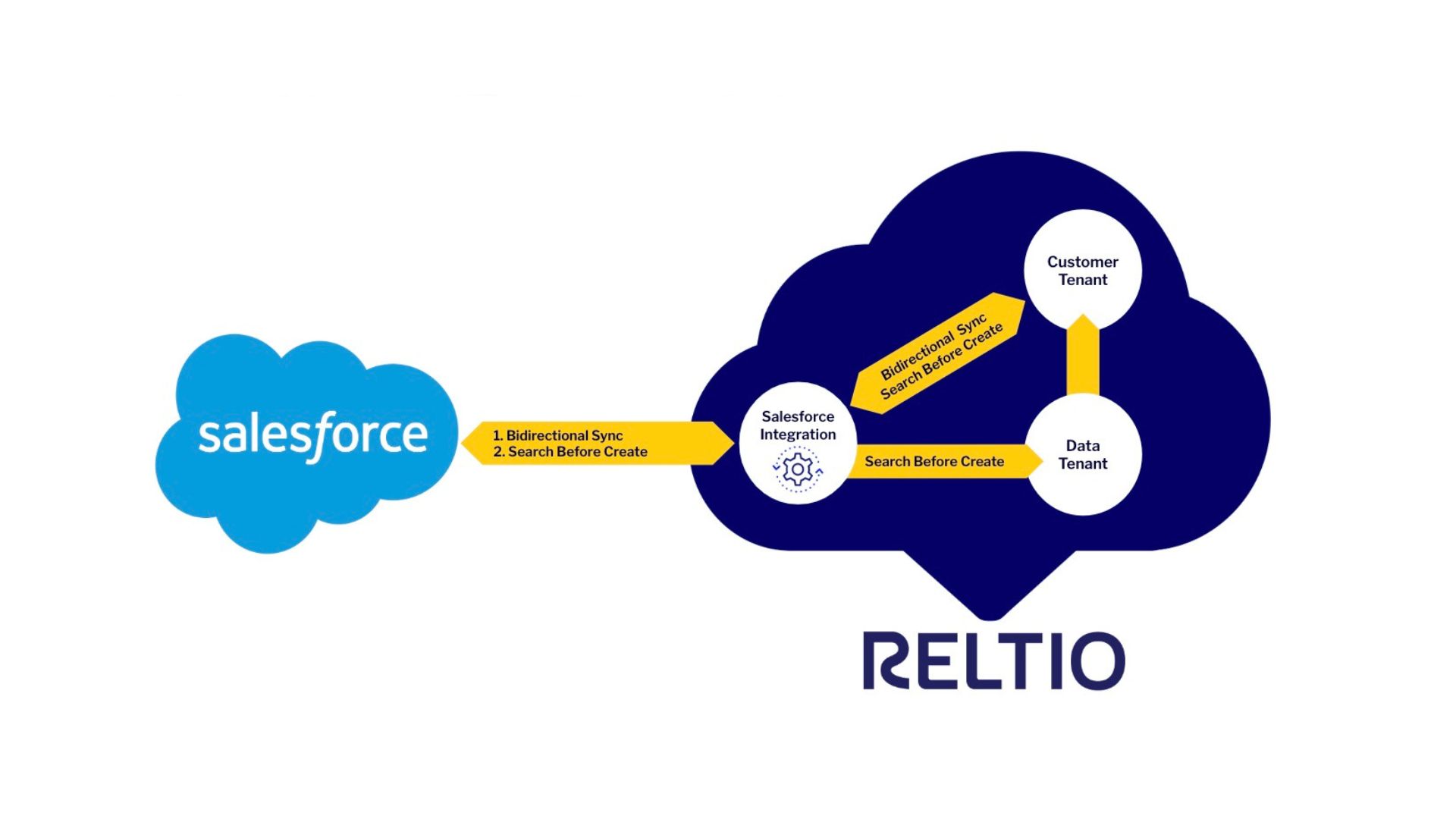
Reltio Integration for Salesforce : Search Before Create, Architecture, Configuration, and Enterprise Data Strategy

Automating Data Quality with Reltio Agentflow: A Smarter Approach to Master Data Management

From Data Mesh to Data Fabric: Choosing the Right Decentralized Architecture for Your Enterprise
Building a DataOps Culture: Accelerating Data Delivery Through Automation and Collaboration