



Executive Summary
Artificial Intelligence has transitioned from experimental innovation to a strategic capability within the retail industry. Retail enterprises now deploy AI-driven systems to forecast demand with greater precision, personalize customer engagement at scale, optimize pricing strategies dynamically, automate fulfillment operations, and enhance fraud detection mechanisms. These capabilities are essential in an environment defined by volatile consumer behavior, margin pressure, omnichannel complexity, and heightened customer expectations for speed and personalization.
Despite its potential, AI adoption across retail organizations remains uneven. Many initiatives stall after pilot deployment, fail to integrate effectively into operational workflows, or struggle to demonstrate sustained return on investment. The underlying causes extend beyond technology limitations and include data fragmentation, aging infrastructure, organizational inertia, talent scarcity, governance ambiguity, and ethical risk exposure. This white paper explores these challenges in depth and analyzes how forward-looking technology leaders are successfully navigating them to create scalable and resilient AI ecosystems.
The Strategic Context of AI in Retail
Retailers operate within highly dynamic markets where competitive differentiation increasingly depends on predictive intelligence and operational agility. Traditional business intelligence systems provide retrospective insight, but AI enables forward-looking decision-making that adapts continuously to real-time conditions. Machine learning models allow retailers to anticipate shifts in demand, optimize assortment planning, reduce inventory waste, and tailor personalized experiences across digital and physical channels. Computer vision applications improve store operations, reduce shrinkage, and enable frictionless checkout, while natural language systems enhance customer service efficiency and responsiveness.
However, AI introduces a fundamentally different operating model compared to conventional enterprise technology. Model accuracy depends on data integrity, governance maturity, and continuous monitoring rather than static system configuration. Value realization requires close coordination between technology teams, business leadership, and frontline operations. Retailers that underestimate this complexity often encounter fragmented implementations that deliver limited strategic impact.
Data Fragmentation and Information Quality Constraints
Data serves as the foundational asset for all AI initiatives. Retail organizations generate massive volumes of structured and unstructured data from point-of-sale transactions, e-commerce interactions, loyalty programs, supply chain systems, in-store sensors, mobile applications, and third-party partners. In many enterprises, these datasets exist within isolated platforms with inconsistent standards, incomplete lineage tracking, and varying quality thresholds. As a result, AI models frequently encounter biased samples, delayed updates, or conflicting records that compromise predictive accuracy and reliability.
Technology leaders address this challenge by elevating data governance to an enterprise discipline rather than treating it as an IT function. Cloud-based data platforms enable scalable ingestion, standardized transformation pipelines, and centralized metadata management. Domain-driven data ownership models preserve operational accountability while enforcing common interoperability standards. Automated quality validation, master data harmonization, and real-time integration architectures improve data reliability and timeliness. These investments establish a sustainable foundation for advanced analytics and AI model lifecycle management.
Legacy Systems and Infrastructure Limitations
Many large retailers operate on technology ecosystems that evolved incrementally over decades. Core merchandising platforms, warehouse management systems, and point-of-sale applications often rely on monolithic architectures, proprietary interfaces, and batch processing pipelines. These environments were not designed to support real-time inference workloads, continuous experimentation, or elastic compute requirements. Integrating AI capabilities into such environments introduces operational complexity, security concerns, and escalating maintenance costs.
Progressive technology leaders pursue gradual modernization strategies that balance operational continuity with innovation velocity. Hybrid architectures allow legacy systems to coexist with cloud-native services while APIs enable decoupling and incremental migration. Container platforms and automated deployment pipelines increase release consistency and reliability. Infrastructure-as-code and observability tooling enhance resilience, governance, and auditability. Over time, technical debt is systematically reduced as critical workloads transition to modular, scalable platforms capable of supporting advanced AI workloads.
Talent Constraints and Organizational Capability Maturity
AI adoption requires specialized skills across data engineering, machine learning, platform engineering, cybersecurity, and applied analytics. The global demand for these competencies exceeds supply, placing retailers at a competitive disadvantage relative to technology-centric organizations. Heavy reliance on external consultants may accelerate initial deployment but often limits internal knowledge retention and long-term scalability.
Leading organizations adopt workforce transformation strategies that prioritize internal capability development. Structured training programs, cross-functional rotational assignments, and applied experimentation environments accelerate skill acquisition among existing employees. Strategic partnerships with academic institutions and certification bodies expand recruitment pipelines while standardized development frameworks reduce dependence on individual expertise. By institutionalizing AI competencies across the enterprise, retailers build durable operating capacity rather than project-specific capability.
Change Management and Cultural Readiness
AI-driven transformation impacts operational workflows, decision authority, performance metrics, and workforce expectations. Store managers, planners, supply chain operators, and merchandising teams may perceive algorithmic recommendations as opaque or misaligned with practical realities. Without deliberate engagement strategies, adoption resistance can undermine business outcomes even when technical performance meets expectations.
Successful technology leaders integrate change management into program design from inception. Business stakeholders actively participate in use case prioritization, model validation, and performance monitoring to establish transparency and trust. Training programs focus on applied usage scenarios rather than abstract technical concepts. Communication strategies emphasize augmentation of human decision-making rather than job displacement. Executive sponsorship reinforces accountability and accelerates organizational alignment.
Ethical Governance and Regulatory Risk Management
Retail AI applications increasingly influence consumer pricing, marketing targeting, workforce scheduling, and credit-related decisions. These domains introduce heightened sensitivity to fairness, privacy, explainability, and regulatory compliance. Inconsistent governance exposes organizations to reputational damage, legal liability, and erosion of customer trust.
Technology leaders embed responsible AI principles directly into development standards and operating procedures. Model validation protocols assess bias, robustness, and interpretability prior to production release. Audit trails and version control mechanisms support regulatory transparency. Cross-functional ethics committees evaluate high-impact use cases and ensure alignment with corporate values and legal obligations. These governance mechanisms enable innovation while maintaining disciplined risk management.
Scaling AI from Experimentation to Enterprise Value
Retail organizations frequently encounter challenges when transitioning from isolated pilots to enterprise-scale deployment. Experimental models often lack integration with operational systems, standardized monitoring frameworks, or financial accountability metrics. Without clear ownership and governance, initiatives remain fragmented and difficult to sustain.
High-performing organizations adopt portfolio-based AI management models that align use cases with enterprise strategy, operational readiness, and measurable financial outcomes. Shared platforms accelerate deployment consistency while MLOps pipelines automate monitoring, retraining, and performance optimization. Continuous value tracking ensures transparency and supports reinvestment decisions. These practices transform AI from experimental capability into institutionalized business infrastructure.
Technology Leadership and Strategic Alignment
Effective AI transformation requires leadership that integrates technology strategy with enterprise objectives. CIOs, CTOs, and digital leaders align investments with customer experience enhancement, operational resilience, and long-term scalability. Governance models promote collaboration between engineering, operations, compliance, and business leadership. Transparent metrics reinforce accountability while continuous stakeholder engagement sustains organizational momentum.
Rather than treating AI as a discrete technology initiative, leading organizations position it as a core business capability that evolves continuously with market dynamics and customer expectations.
Conclusion
AI initiatives in retail deliver substantial opportunity but require disciplined execution across technology, governance, talent, and organizational dimensions. Data fragmentation, infrastructure constraints, workforce limitations, cultural resistance, and regulatory complexity remain persistent challenges. Technology leaders who adopt modern architectures, enterprise data governance, structured change management, and responsible AI frameworks consistently achieve superior business outcomes.
Sustainable AI success depends on long-term commitment, cross-functional alignment, and continuous operational maturity. Retail organizations that institutionalize these practices position themselves to achieve competitive differentiation, improved operational efficiency, and enduring customer loyalty in an increasingly data-driven economy.
Building RDM Update Agents with Reltio AgentFlow
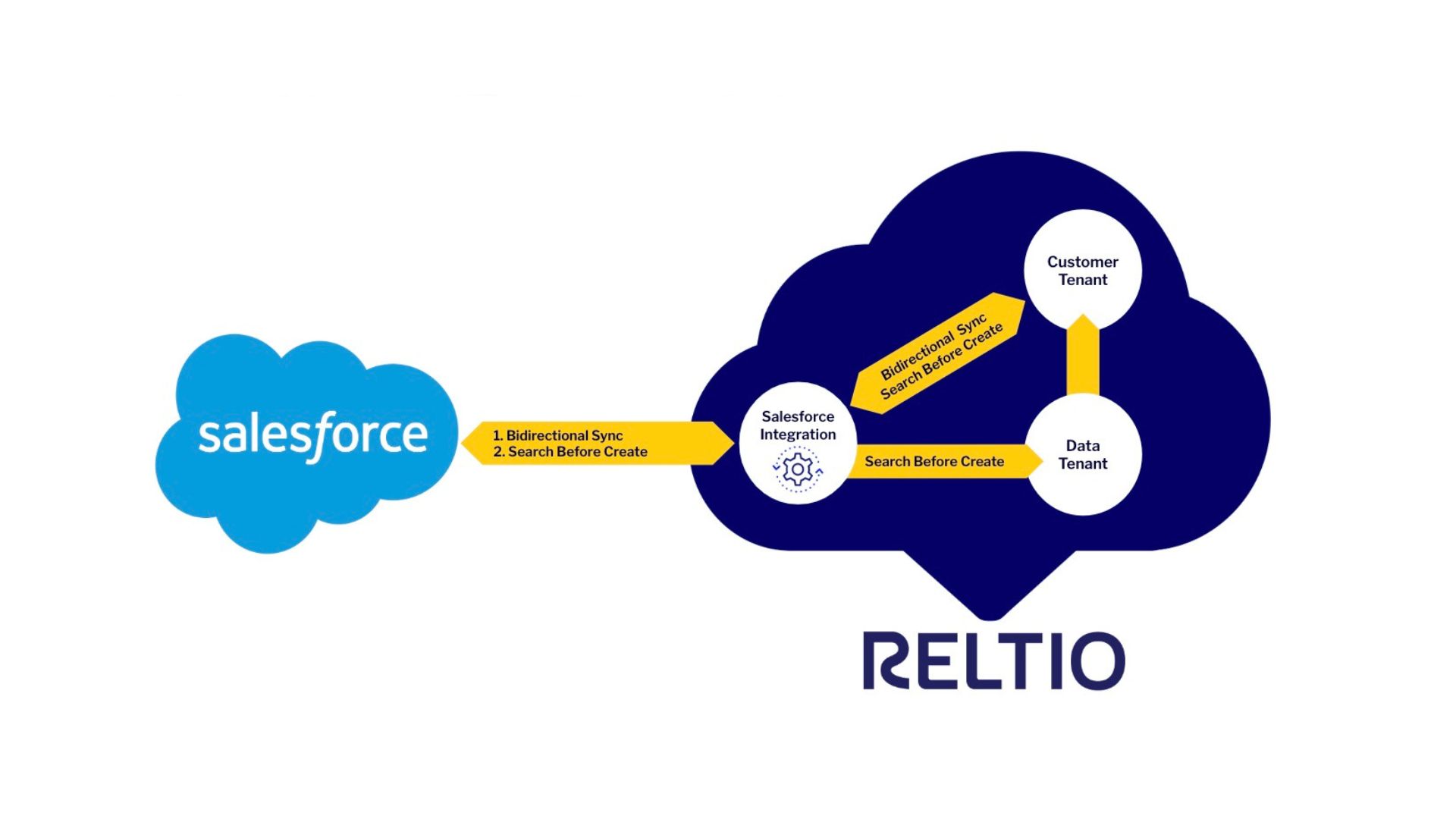
Reltio Integration for Salesforce : Search Before Create, Architecture, Configuration, and Enterprise Data Strategy

Automating Data Quality with Reltio Agentflow: A Smarter Approach to Master Data Management

From Data Mesh to Data Fabric: Choosing the Right Decentralized Architecture for Your Enterprise

Building a DataOps Culture: Accelerating Data Delivery Through Automation and Collaboration