



Beyond BI: The Rise of Autonomous Agents
Autonomous agents are emerging as the next frontier in enterprise intelligence. Unlike traditional analytics or even advanced machine learning models, autonomous agents are designed to reason, decide, and actacross systems with limited human intervention. They move enterprises from insight generation to execution at scale.
For years, business intelligence and dashboards have been the backbone of data-driven decision-making. They provided visibility into historical performance and supported human-led interpretation. But as enterprises face real-time operational complexity—dynamic supply chains, personalized customer engagement, continuous risk exposure—this model is showing its limits.
Dashboards describe what happened. Autonomous agents determine what should happen next.
The gap between descriptive analytics and autonomous execution is widening. Many organizations are experimenting with agentic AI, yet few are prepared to operationalize it. The constraint is rarely the model. It is the data stack underneath.
An agent-ready enterprise requires data foundations that support trust, traceability, and consistency at machine speed. Lineage, governance, and master data management (MDM) are no longer supporting functions—they are the control systems that make autonomy viable.
What Does “Agent-Ready” Mean?
Agent readiness is not the same as AI maturity. An organization can have advanced models and still be unprepared for autonomous agents.
An agent-ready data stack enables AI systems to:
- Reason across structured and unstructured data
- Act by triggering workflows and transactions
- Orchestrate decisions across multiple systems
- Learn through feedback loops and outcomes
- Operate safely within defined policies and controls
This differs fundamentally from dashboards, reports, or even single-model AI deployments. Traditional analytics stop at insight. Autonomous agents operate continuously within production environments.
Many existing data platforms fall short because they were built for:
- Batch reporting rather than real-time decision automation
- Human interpretation rather than machine reasoning
- Static governance rather than runtime enforcement
Agent readiness requires rethinking how trust, ownership, and accountability are embedded directly into the data stack.
Lineage: The Backbone of Trust
In an agentic environment, lineage is not optional—it is foundational.
Lineage answers three critical questions:
- Where did this data come from?
- How was it transformed?
- Which decisions and actions did it influence?
For autonomous agents, lineage extends beyond datasets to include:
- Model inputs and feature derivation
- Decision paths taken by agents
- Actions executed across systems
- Downstream business impact
AI-ready lineage enables traceability, impact analysis, and auditability at scale. When an agent makes a decision—approving a transaction, adjusting pricing, flagging risk—enterprises must be able to reconstruct why that decision occurred.
Enterprise patterns for lineage include:
- End-to-end data lineage across ingestion, transformation, and consumption
- Model and feature lineage tied to datasets
- Decision lineage linking data inputs to outcomes
- Metadata-driven lineage graphs accessible to governance and risk teams
Without lineage, autonomous systems become opaque. Trust erodes quickly when decisions cannot be explained or audited.
Governance for Agents
Traditional data governance often relies on manual approvals, static policies, and centralized oversight. These approaches struggle in agentic environments where decisions occur continuously and at machine speed.
Autonomous agents require governance that operates at runtime.
This shifts governance from gates to guardrails. Instead of blocking access, policies are encoded into metadata and enforced dynamically. Governance becomes part of execution, not a prerequisite step that slows it down.
Key elements of agent-ready governance include:
- Metadata-driven access controls and policy enforcement
- Clear ownership and accountability at the data and decision level
- Embedded risk thresholds and escalation paths
- Continuous monitoring of agent behavior and outcomes
- Ethical and compliance constraints applied automatically
A governance control plane allows enterprises to scale autonomy without losing control. It ensures that agents act within approved boundaries while still delivering speed and efficiency.
Master Data Management (MDM) and Identity Resolution
Autonomous agents depend on consistent understanding of core business entities. Without this, decision logic fragments.
MDM provides that consistency by establishing trusted definitions for customers, products, suppliers, locations, and other critical entities. It resolves duplicates, manages hierarchies, and enforces survivorship rules.
In agentic systems, MDM plays a critical role in:
- Preventing decision drift caused by inconsistent identifiers
- Ensuring agents operate on the same entity definitions
- Supporting cross-domain reasoning and orchestration
- Aligning decisions across systems and functions
For example, a pricing agent and a customer service agent must share a consistent customer identity to avoid conflicting actions. MDM becomes the semantic anchor that allows agents to reason coherently across the enterprise.
Aligning MDM with agentic workflows means treating mastered data as a service—accessible in real time and governed centrally.
A Practical Framework for Building an Agent-Ready Data Stack
Enterprises can assess agent readiness through a structured framework that aligns technology, governance, and operations.
Assessment Checklist
- Are critical entities mastered and consistently defined?
- Can data lineage trace decisions end-to-end?
- Are governance policies enforced automatically at runtime?
- Can data quality issues be detected and resolved quickly?
- Are real-time and event-driven data streams supported?
Reference Architecture
An agent-ready data stack typically includes:
- A lineage layer capturing data, model, and decision flows
- A governance control plane driven by metadata and policy
- MDM services providing consistent entity resolution
- Integration with ML pipelines and real-time streaming platforms
- Feedback loops connecting outcomes back to learning systems
Integration Patterns
- Event-driven ingestion and streaming for real-time signals
- API-based access to master data and governed datasets
- Feature pipelines aligned with lineage and quality controls
- Observability across data, models, and agent behavior
This architecture emphasizes reliability and transparency over experimentation.
Organizational and Operational Readiness
Technology alone does not make an enterprise agent-ready. Organizational alignment is equally critical.
Key roles include:
- Data stewards responsible for quality and definitions
- MDM owners accountable for core entities
- Governance councils setting policy and oversight
- AI operations teams managing deployment and monitoring
Agentic workflows cut across functions. Success requires collaboration between IT, data, security, legal, and business teams. Clear ownership and escalation paths prevent confusion when autonomous decisions affect operations.
Change management is essential. Employees must trust agent outputs and understand how decisions are made. Transparency and explainability are as important as performance.
Use Cases and Scenarios
Autonomous Supply Chain Optimization
Agents monitor demand signals, inventory levels, and supplier performance to adjust replenishment plans in real time—escalating exceptions rather than requiring manual planning cycles.
Risk Detection and Automated Remediation
Agents identify anomalies across transactions, assess risk using governed rules, and initiate mitigation workflows while maintaining audit trails.
Customer Service Orchestration
Agents coordinate across CRM, billing, and support systems to resolve issues end-to-end, using consistent customer identity and governed actions.
In each scenario, lineage, governance, and MDM determine whether autonomy is scalable or risky.
Conclusion: The Roadmap to Autonomous Intelligence
Autonomous agents represent a shift from data-informed decisions to data-executed outcomes. But autonomy without trust is unsustainable.
Lineage, governance, and master data management are not supporting capabilities—they are the foundations that make agent-ready data stacks possible. Enterprises that invest in these areas position themselves to scale AI safely and effectively.
For executives, the call to action is clear: evaluate whether your data stack can support autonomous agents—not in theory, but in practice. Agent readiness is not about adopting new tools. It is about building a data ecosystem that can be trusted to decide.
The future of enterprise intelligence belongs to organizations that prepare their data stack for autonomy today.
Building RDM Update Agents with Reltio AgentFlow
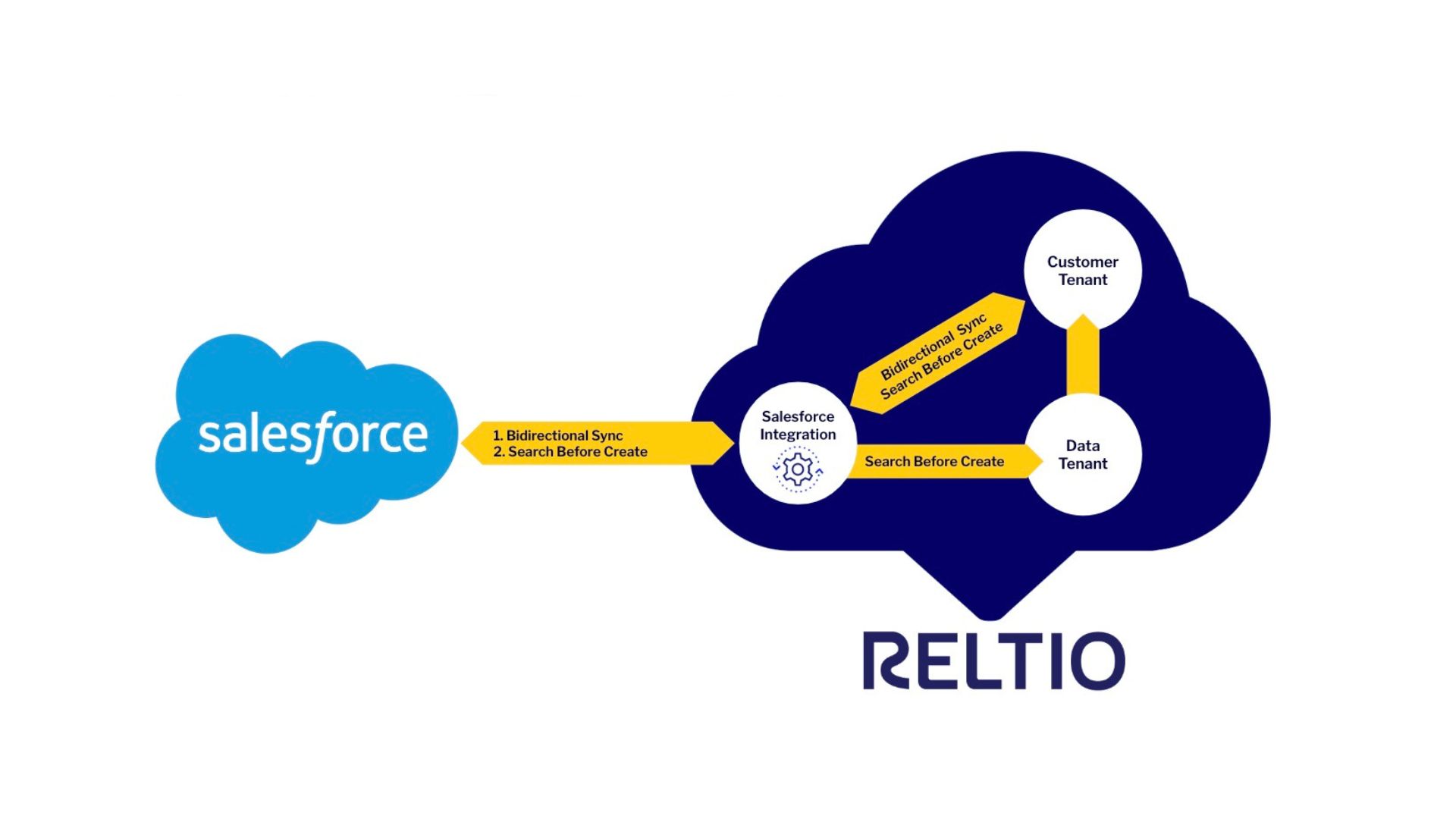
Reltio Integration for Salesforce : Search Before Create, Architecture, Configuration, and Enterprise Data Strategy

Automating Data Quality with Reltio Agentflow: A Smarter Approach to Master Data Management

From Data Mesh to Data Fabric: Choosing the Right Decentralized Architecture for Your Enterprise

Building a DataOps Culture: Accelerating Data Delivery Through Automation and Collaboration