


Inventory Turnover as a Competitive Advantage
For retailers, inventory turnover has always been a core financial metric. By 2026, it becomes a strategic differentiator. Rising interest rates, persistent supply chain volatility, omnichannel complexity, and margin pressure have fundamentally changed the economics of holding inventory. Capital tied up in slow-moving stock now represents not just inefficiency, but competitive risk.
Inventory velocity matters more than inventory volume. Retailers that move goods faster—without increasing stockouts—free working capital, reduce markdown exposure, and respond more effectively to demand shifts. Those that cannot are left absorbing excess inventory, reactive discounting, and eroding margins.
Artificial intelligence is increasingly central to this shift. Not as a standalone forecasting model, but as an operational capability that connects demand signals, inventory positions, supplier constraints, and execution systems in near real time. Retailers that adopt AI with the right data foundations and operating models are demonstrating sustained improvements in inventory turnover—often approaching 25–30% over multi-year transformations—while maintaining service levels.
The differentiator is not ambition. It is execution.
Why Traditional Inventory Models Break Down
Many retailers still rely on planning models and systems designed for a simpler operating environment. These approaches struggle to keep pace with today’s realities.
- Static forecasts and batch planning cycles
Traditional demand forecasting often relies on historical averages and periodic recalibration. In an environment shaped by promotions, local events, weather volatility, and channel shifts, batch forecasts quickly become outdated. - Siloed demand, supply, and merchandising data
Sales, inventory, promotions, supplier lead times, and logistics data frequently live in separate systems. Without unification, planners lack a complete view of inventory risk or opportunity. - Manual overrides and delayed decision-making
When exceptions arise—unexpected demand spikes, delayed shipments, or allocation issues—manual interventions dominate. Decisions are slower than the events they attempt to manage. - Limited visibility across channels and regions
Omnichannel fulfillment has blurred the boundaries between stores, warehouses, and digital channels. Legacy models were never designed to optimize inventory across this complexity.
The result is predictable: overstock in some locations, stockouts in others, and inventory that turns slower than it should.
How AI Improves Inventory Turnover
Retail AI changes inventory management by shifting it from reactive planning to predictive and increasingly autonomous decisioning.
Demand forecasting with machine learning
Modern machine-learning models incorporate far more signals than traditional methods: transaction data, promotions, price changes, weather, local events, digital behavior, and macro trends. Forecasts are refreshed continuously, not monthly or quarterly.
Dynamic replenishment and safety stock optimization
AI models adjust reorder points and safety stock levels based on real-time demand volatility, lead-time variability, and service-level targets. This reduces excess inventory without increasing risk.
Store-level and SKU-level decisioning
Instead of broad regional assumptions, AI enables granular decisions at the store-SKU level—where most inventory inefficiencies originate.
Event-driven responses to disruption
AI systems can respond automatically to disruptions such as delayed shipments, unexpected demand surges, or supplier issues—rerouting inventory or adjusting allocations before problems escalate.
The result is faster inventory movement, better alignment between supply and demand, and fewer costly manual interventions.
Data Foundations Retailers Need
AI-driven inventory optimization is only as strong as the data foundation supporting it.
Unified demand, supply, and inventory data
Retailers must integrate POS data, e-commerce transactions, inventory balances, supplier lead times, logistics events, and promotions into a shared data environment.
Master data management (MDM)
Consistent definitions of products, locations, suppliers, and hierarchies are critical. Without MDM, forecasts and replenishment decisions fragment across systems.
Data quality, lineage, and governance
AI decisions must be trusted. That requires visibility into data sources, transformations, and ownership, along with quality controls and auditability.
Real-time and near-real-time pipelines
Batch updates are insufficient for modern retail. Near-real-time data pipelines allow AI systems to react as conditions change, not after the fact.
Retailers that invest in these foundations consistently outperform those that attempt to “bolt AI on” to fragmented data landscapes.
From Insights to Execution: AI-Driven Inventory Operations
Forecasts alone do not improve turnover. Execution does.
Decision intelligence and automated replenishment
AI systems translate forecasts into actions: reorder quantities, allocation decisions, and transfer recommendations that flow directly into operational systems.
Human-in-the-loop controls
Automation does not eliminate oversight. Exception thresholds, approvals, and override workflows ensure planners intervene where judgment is required.
Integration with ERP, OMS, WMS, and supplier systems
Inventory decisions must propagate across enterprise systems to be effective. Tight integration ensures plans become actions, not reports.
This shift—from insight generation to operational execution—is where measurable turnover gains are realized.
Practical Framework: Achieving 30% Improvement by 2026
Significant improvement in inventory turnover is rarely instantaneous. Leading retailers follow a phased approach.
Phase 1: Data readiness and baseline metrics
Establish a unified data foundation, define master data standards, and baseline key KPIs such as turnover, DIO, stockouts, and markdowns.
Phase 2: Predictive forecasting and AI pilots
Deploy machine-learning models for priority categories or regions. Focus on forecast accuracy, replenishment effectiveness, and planner adoption.
Phase 3: Scaled automation and continuous optimization
Expand AI-driven replenishment and allocation across categories and channels. Introduce event-driven automation and continuous learning loops.
Over a multi-year horizon, this approach enables sustained gains that compound over time—often approaching 30% improvements in inventory turnover for mature implementations.
Retail Use Cases
AI-driven inventory optimization delivers value across multiple scenarios:
- Omnichannel inventory balancing: Dynamically reallocating stock across stores, DCs, and fulfillment centers.
- Seasonal and promotional planning: Anticipating demand spikes and adjusting inventory proactively.
- New product introduction forecasting: Using analog products and early signals to reduce launch risk.
- Reducing markdowns and stockouts: Aligning supply more precisely with demand patterns.
Each use case contributes incrementally to faster inventory movement and improved margins.
Measuring Impact
To sustain progress, retailers must measure the right outcomes:
- Inventory turnover and DIO
- Stockout and overstock rates
- Working capital efficiency
- Gross margin and service-level improvements
- Planner productivity and exception rates
Metrics should be reviewed continuously, not just during planning cycles.
How Apptad Supports AI-Driven Inventory Optimization
Apptad supports retailers as they modernize inventory operations by strengthening the underlying data and analytics ecosystem. This includes data engineering and integration to unify demand, supply, and inventory data; cloud and analytics platform modernization to support scalable AI workloads; advanced analytics and machine-learning enablement; and governance frameworks that ensure inventory decisions are trusted, auditable, and operationally aligned.
This approach helps retailers move beyond isolated pilots toward sustainable, enterprise-wide inventory optimization.
Inventory Velocity as a Retail Growth Lever
In 2026, inventory velocity will distinguish retail leaders from laggards. AI-driven inventory optimization is no longer optional—it is a prerequisite for resilience, margin protection, and growth.
Retailers that invest in strong data foundations, integrate AI into execution workflows, and adopt phased, realistic transformation roadmaps are positioned to unlock substantial improvements in inventory turnover. Those that do not risk slower movement, higher costs, and reduced competitiveness.
Inventory is not just something to manage. It is a lever to be optimized—intelligently, continuously, and at scale.
Building RDM Update Agents with Reltio AgentFlow
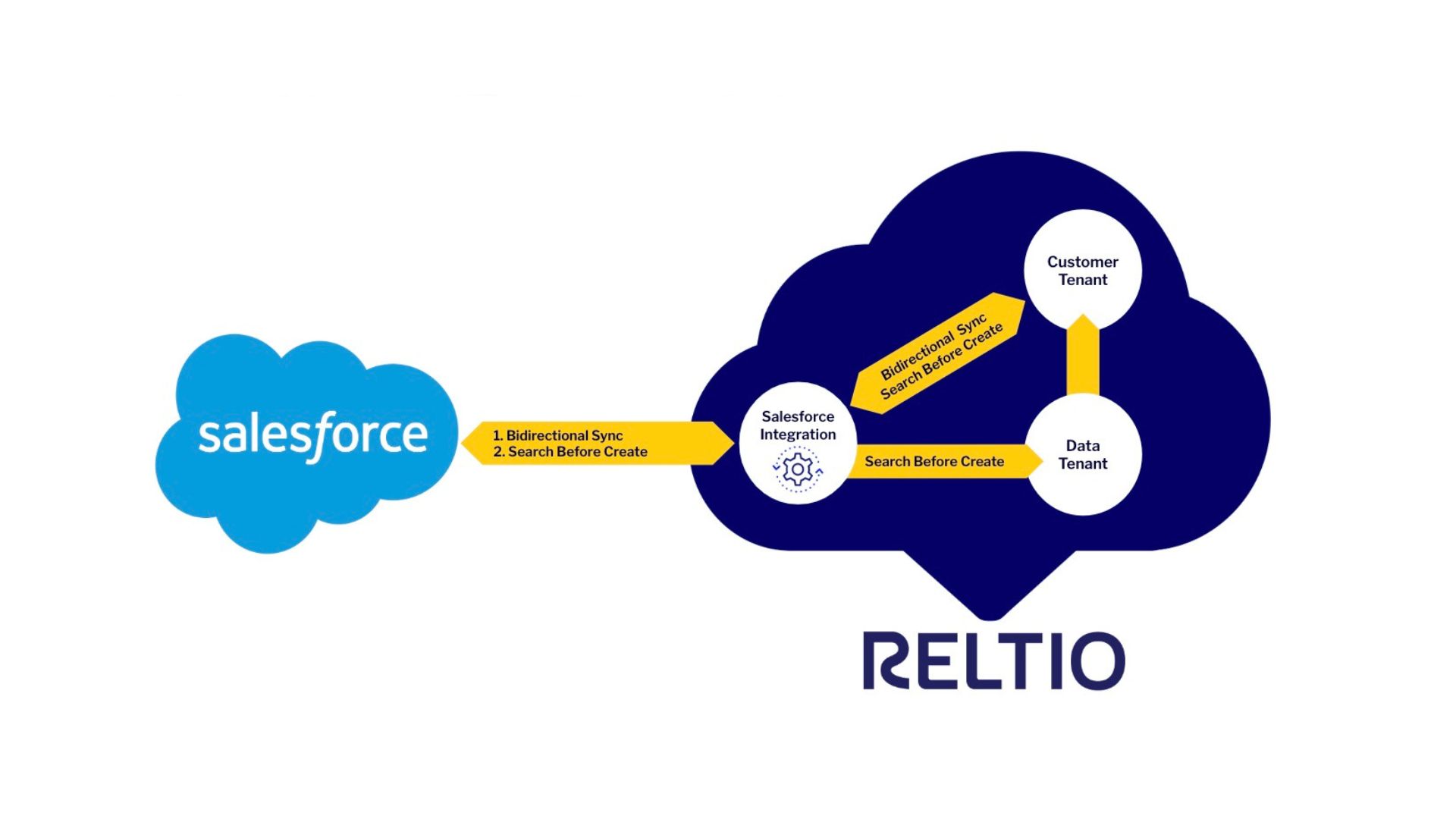
Reltio Integration for Salesforce : Search Before Create, Architecture, Configuration, and Enterprise Data Strategy

Automating Data Quality with Reltio Agentflow: A Smarter Approach to Master Data Management

From Data Mesh to Data Fabric: Choosing the Right Decentralized Architecture for Your Enterprise

Building a DataOps Culture: Accelerating Data Delivery Through Automation and Collaboration