



Pharmaceutical organizations operate in one of the most data-intensive and highly regulated business environments in the world. From early-stage discovery through clinical development, manufacturing, commercialization, and post-market surveillance, every function depends on accurate, consistent, and traceable data. Product definitions, compound hierarchies, trial site information, investigator profiles, supplier records, regulatory identifiers, and labeling attributes must remain synchronized across dozens of systems while meeting strict regulatory expectations. Any breakdown in governance or master data operations can result in compliance exposure, operational delays, or compromised patient safety.
As digital transformation accelerates and data volumes grow exponentially, traditional master data management approaches struggle to keep pace. Manual stewardship workflows, disconnected approval processes, and limited auditability make it difficult to scale governance without adding operational friction. Reltio Agentflow addresses this challenge by embedding intelligent workflow orchestration directly into the master data platform, enabling pharmaceutical companies to operationalize governance rather than treating it as a separate control layer.
Reltio Agentflow functions as a workflow automation and micro-orchestration engine within the Reltio Connected Data Platform. It allows organizations to respond to data events in real time, trigger business rules, assign tasks to data stewards and business owners, integrate with external enterprise systems, and maintain complete traceability of every decision and change. Instead of relying on offline emails, spreadsheets, or ticketing systems, governance becomes an intrinsic part of how master data is created, validated, enriched, and published.
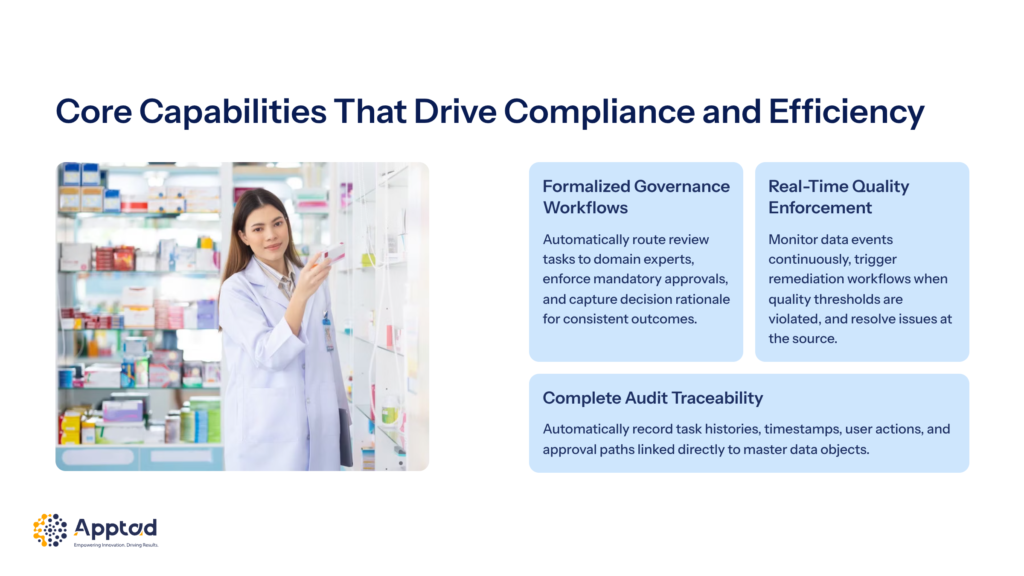
One of the most important advantages Agentflow brings to pharmaceutical companies is the ability to formalize governance policies into executable workflows. When a new medicinal product is introduced, for example, multiple stakeholders must validate attributes such as formulation, strength, regulatory classification, serialization requirements, and market authorization references. Agentflow can orchestrate this end-to-end process by automatically routing review tasks to the appropriate domain experts, enforcing mandatory approvals before records become active, and capturing the rationale behind each decision. This creates a standardized, repeatable governance process that reduces ambiguity and ensures consistent outcomes across global teams.
Data quality enforcement is another critical area where Agentflow delivers measurable value. Pharma master data must adhere to controlled vocabularies, regulatory reference standards, and internal naming conventions. Inconsistent or incomplete attributes can propagate downstream into manufacturing execution systems, labeling platforms, or regulatory submissions, creating rework and risk. Agentflow continuously monitors data events and validation rules, triggering remediation workflows when quality thresholds are violated. Instead of discovering issues weeks later during reconciliation or audits, organizations can resolve them immediately at the source, improving trust in enterprise data.
In regulated environments, speed alone is not sufficient; transparency and traceability are equally essential. Regulatory agencies expect companies to demonstrate how critical data elements were created, reviewed, approved, and modified over time. Agentflow automatically records task histories, timestamps, user actions, and approval paths, linking them directly to the master data objects they govern. This creates a living audit trail that can be queried during inspections or internal audits without reconstructing evidence from multiple systems. The result is improved audit readiness and reduced compliance burden.
Pharmaceutical data operations also require seamless coordination between automated system processes and human decision-making. A product attribute update may originate from an ERP system, require scientific validation by regulatory affairs, and then propagate to supply chain and labeling systems. Agentflow orchestrates these hybrid workflows by integrating APIs, messaging services, and stewardship interfaces into a single governed flow. This ensures that automated integrations do not bypass governance controls and that human approvals are embedded directly into operational pipelines rather than layered on afterward.
Master data operations themselves become significantly more efficient when Agentflow is applied consistently. Activities such as onboarding new products, qualifying suppliers, resolving duplicate records, and synchronizing hierarchies across systems often consume large stewardship teams and introduce delays. Agentflow can automatically detect potential duplicates, initiate review workflows based on confidence scoring, and apply merge or survivorship rules once approved. Similarly, onboarding workflows can validate completeness, enforce compliance checks, and publish trusted records downstream without manual handoffs. This accelerates cycle times while maintaining high governance standards.
Context awareness is another differentiator in complex pharmaceutical data landscapes. Entities rarely exist in isolation; a product is linked to compounds, manufacturing sites, suppliers, markets, and regulatory submissions. Agentflow workflows can leverage these relationships to trigger intelligent governance actions based on impact analysis. A change in a supplier qualification, for example, can automatically initiate downstream reviews for affected products or facilities. This graph-aware orchestration helps organizations manage risk proactively rather than reactively.
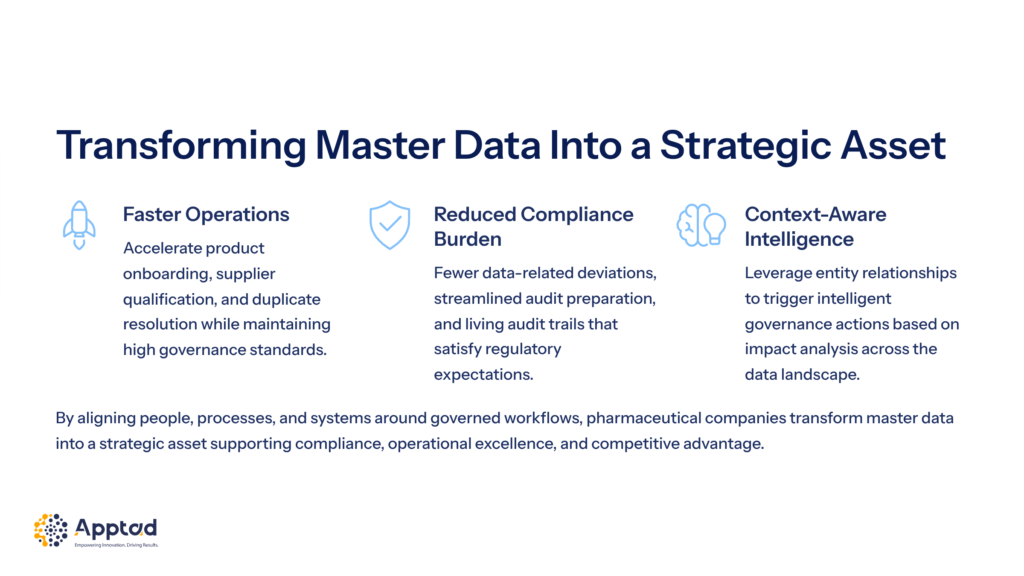
From a business perspective, these capabilities translate into tangible outcomes. Organizations experience faster product onboarding, fewer data-related deviations, reduced audit preparation effort, and higher confidence in analytics and operational reporting. Governance teams shift from manual coordination to exception management and continuous improvement. IT teams benefit from standardized automation patterns that are easier to maintain and scale. Most importantly, the enterprise gains a trusted data foundation that supports regulatory compliance, operational excellence, and innovation.
In an industry where data integrity directly impacts patient safety, regulatory credibility, and commercial performance, governance cannot remain an afterthought. Reltio Agentflow embeds governance into the operational fabric of master data management, enabling pharmaceutical companies to move beyond reactive controls toward proactive, automated, and auditable data operations. By aligning people, processes, and systems around governed workflows, organizations can transform master data into a strategic asset that supports both compliance and competitive advantage.
Building RDM Update Agents with Reltio AgentFlow
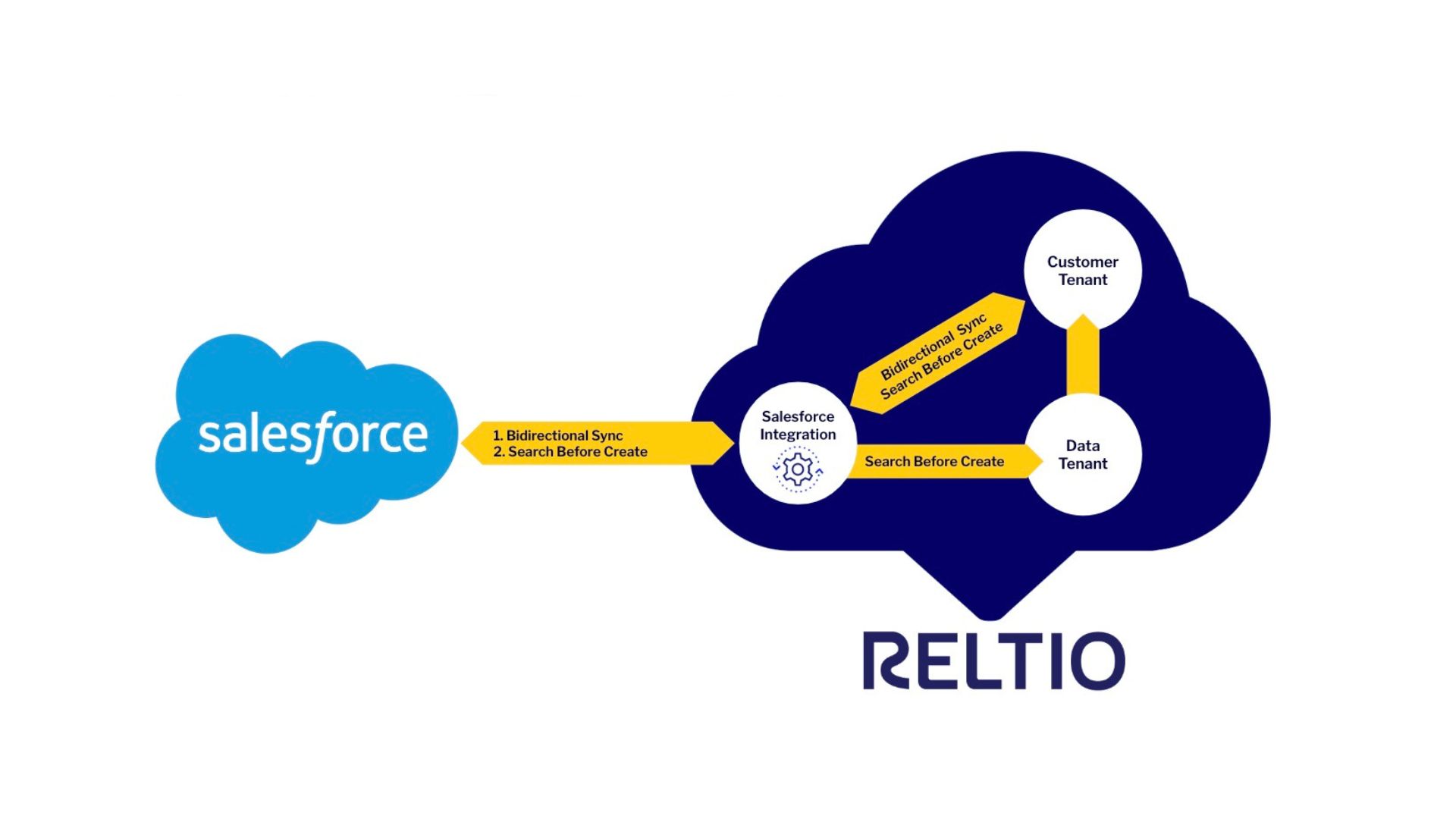
Reltio Integration for Salesforce : Search Before Create, Architecture, Configuration, and Enterprise Data Strategy

Automating Data Quality with Reltio Agentflow: A Smarter Approach to Master Data Management

From Data Mesh to Data Fabric: Choosing the Right Decentralized Architecture for Your Enterprise

Building a DataOps Culture: Accelerating Data Delivery Through Automation and Collaboration