



MDM at the Center of Enterprise Transformation
Master Data Management (MDM) has become one of the most mission-critical foundations for enterprises navigating today’s digital landscape. As organizations accelerate cloud adoption, embed AI/ML into operations, and adapt to tightening regulatory expectations, the pressure to maintain accurate, governed, real-time master data has never been greater.
In 2025, poor master data doesn’t just slow processes—it directly impacts AI model accuracy, compliance readiness, supply-chain continuity, customer experience, and financial reporting reliability.
Yet many enterprises still grapple with a fundamental decision:
- Should we build and run MDM internally (DIY)?
- Or partner with specialists through a Managed MDM model?
This blog explores both paths—where they work, where they struggle, and how leaders can choose the right MDM operating model for long-term success.
DIY MDM vs. Managed MDM: What’s the Difference?
DIY MDM (In-House Build & Run)
The enterprise internally builds, configures, and operates its MDM platform—handling everything from architecture and integrations to data stewardship.
Characteristics include:
- Customized integrations and workflows
- In-house data governance and stewardship
- Ownership of uptime, quality, and SLAs
- CapEx-heavy model (licenses + engineering)
- Dependence on strong engineering and data talent
Managed MDM (Partner-Enabled or Fully Managed)
A specialized MDM partner implements, optimizes, and/or runs the MDM program end-to-end—bringing accelerators, automation, frameworks, and dedicated teams.
Characteristics include:
- Faster implementation using templates and playbooks
- Expert handling of complex integrations
- Continuous governance, monitoring, and support
- OpEx-friendly subscription/service model
- Access to specialized platform and AI/ML expertise
DIY vs. Managed MDM: A Practical Comparison
Architecture
DIY solutions are deeply customized but often inconsistent, depending heavily on internal skills.
Managed MDM leverages proven reference architectures aligned with modern data mesh/fabric patterns.
Implementation Speed
DIY MDM tends to move slowly, as teams underestimate matching rules, governance design, and domain modeling.
Managed MDM accelerators reduce delivery cycles from months to weeks.
Cost Profile
DIY requires significant CapEx for engineering, tools, and rework.
Managed MDM delivers predictable OpEx and usually a lower total cost of ownership (TCO).
Skills & Talent
DIY requires engineering, governance, platform, and domain experts.
Managed MDM brings cross-platform expertise (e.g., Reltio, Informatica, Salesforce MDM, Azure, Databricks).
Governance
DIY governance is often uneven across domains.
Managed programs include standard governance frameworks, workflows, stewardship, and metadata practices.
Scalability
DIY typically struggles to scale beyond a domain or region.
Managed MDM is designed for multi-domain, multi-cloud, global deployment.
Risk Profile
DIY risk is higher—technical debt, poor data quality, inconsistent rules.
Managed approaches reduce risk through SLAs, observability, and continuous improvement.
Where DIY MDM Typically Works
DIY MDM succeeds under a specific set of conditions:
1. Mature, well-resourced data teams
Organizations with strong engineering culture and dedicated governance teams can maintain complex MDM stacks.
2. Simple or single-domain needs
If the goal is just a customer master or product master with stable, predictable data flows, DIY can be feasible.
3. Strong data culture and clear ownership
Success is higher when roles, stewardship, and quality responsibilities are already embedded in the organization.
4. Existing internal platforms and reusable components
Enterprises with strong internal pipelines, APIs, metadata layers, and observability already in place can extend them to MDM.
Where DIY MDM Commonly Fails
Most DIY MDM initiatives struggle because organizations underestimate complexity. Common failure patterns include:
1. Technical Debt from Misaligned Architecture
One-off scripts, custom rules, and manual pipelines grow brittle over time—breaking with every update.
2. Tool Sprawl
DIY teams assemble multiple tools for matching, quality, metadata, workflow—but they rarely integrate cleanly.
3. Slow Time-to-Value
DIY projects often stall for years in design cycles or MVP loops.
4. Lack of Specialized MDM Talent
MDM requires engineering, governance, platform administration, and domain knowledge—skills most teams don’t fully possess.
5. Rising TCO from Constant Firefighting
Teams spend months fixing duplicates, pipeline failures, and data drift—far exceeding planned budgets.
6. Weak Business Buy-In
When business stewards aren’t embedded, definitions clash, adoption is low, and MDM is dismissed as an IT tool.
Warning Signs That DIY MDM Is Breaking Down
If your program shows two or more of these, DIY may no longer be sustainable:
- Persistent firefighting
- Growing duplicates and conflicting golden records
- Slow onboarding of suppliers/customers/products
- Metadata inconsistencies
- Rising maintenance costs
- Business teams bypassing MDM
- High staff turnover
- Integrations breaking after system changes
Where Managed MDM Shines
1. Faster Time-to-Value
Partners use accelerators and proven patterns to reduce delivery timelines dramatically.
2. Access to Deep Expertise
Experts bring mastery of mastering algorithms, matching rules, data quality frameworks, and cloud/AI integrations.
3. Lower Operational Risk
SLAs, observability, and 24x7 monitoring improve platform reliability and data quality.
4. AI-Enabled Automation
Includes AI-driven matching, enrichment, anomaly detection, rule generation, and intelligent stewardship workflows.
5. Multi-Domain and Multi-Cloud Scale
Capabilities extend across customer, product, supplier, asset, and location domains.
6. Continuous Optimization
Managed teams evolve governance, rules, security, and pipelines—preventing stagnation.
Where Enterprises Succeed: DIY vs. Managed MDM
Successful DIY MDM Programs Share These Traits
Organizations that succeed with DIY typically have:
- Strong enterprise data culture
Business and IT collaborate seamlessly, using shared definitions and stewardship practices. - Robust internal engineering capability
Teams can build scalable pipelines, automate matching rules, and maintain metadata consistency. - Clear ownership and governance discipline
Data domains have identified stewards, KPIs, and review cycles that keep quality high. - Limited complexity or single-domain focus
DIY performs best when starting with one stable domain and gradually expanding. - Investment in automation and observability
Successful DIY programs rely heavily on monitoring, lineage, and automated quality controls to avoid technical debt.
When these conditions exist, DIY can give organizations flexibility, cost control, and deeper alignment with internal processes.
Successful Managed MDM Programs Share These Traits
Managed MDM succeeds when organizations value:
- Business–IT co-sponsorship with measurable KPIs
Success metrics link to tangible results—reduced customer disputes, faster onboarding, fewer data errors. - Standardized playbooks and governance frameworks
Partners provide structured stewardship models, workflows, and escalation paths. - Multi-domain and multi-cloud scalability needs
Managed teams streamline expansion across domains like customer, product, supplier, asset, location. - Continuous optimization
Rules, mappings, AI models, and enrichment logic evolve based on business change—not once per quarter. - Predictable cost and reduced operational risk
With SLAs, dedicated support teams, and observability tools, enterprises gain stability and resilience.
In these environments, managed services accelerate transformation and free internal teams to focus on strategic value.
Hybrid Models: The Best of Both Worlds
Hybrid operating models are becoming popular in 2025 as enterprises want flexibility without sacrificing expertise. Industry guidance from platforms like Reltio, Informatica, and Semarchy highlights three effective patterns:
1. Partner-Led Implementation + Internal Run
A partner designs and launches the MDM program, while internal teams gradually take over operations.
Ideal when:
- The enterprise lacks initial expertise
- Long-term ownership is desired
2. Internal Governance + Managed Operations
Enterprise retains stewardship and domain ownership, while the partner manages platform operations, enhancements, and monitoring.
Ideal when:
- Strong business ownership exists
- Technical capacity is limited
3. Federated Hybrid
Complex organizations adopt a split model:
- Central MDM governance team
- Distributed data domain teams
- Managed services for platform + automation
Ideal when:
- Multiple business units or regions operate independently
- Multi-domain MDM is required
Hybrid models allow enterprises to evolve skills while maintaining stability and speed.
How Apptad De-Risks MDM for Enterprises
Positioned naturally, not as a brochure.
Apptad helps enterprises reduce MDM risk through:
- AI-enabled MDM frameworks for matching, quality, and enrichment
- Data governance accelerators and stewardship workflows
- Pre-built assets for Customer 360, Supplier Master, and compliance-driven MDM
- Strong ecosystem partnerships with platforms like Reltio, Informatica, Salesforce, Snowflake, Azure, and Databricks
- Proven reduction in time-to-value through templates, automation, and reusable connectors
Apptad’s approach ensures MDM is not just implemented—but operational, governed, scalable, and delivering business outcomes.
A Decision Framework: DIY or Managed MDM?
DIY Might Be Right If:
- You have a strong internal engineering organization
- MDM needs are single-domain or low complexity
- Governance and metadata practices are mature
- You want highly customized workflows
- You have time to build and refine the platform
Managed MDM Is Better If:
- Data quality issues are growing faster than you can handle
- You need rapid time-to-value
- Hiring/retaining MDM talent is difficult
- You have multi-domain or multi-cloud requirements
- Governance is inconsistent
- You prefer predictable OpEx
- AI/ML initiatives depend on high-quality master data
Choosing the Right Path for 2025 and Beyond
Master Data Management is no longer a backend IT function—it is a strategic enterprise capability that fuels AI, compliance, customer experience, operational efficiency, and business growth.
Whether DIY or Managed MDM is right depends on organizational maturity, skills, scope, and urgency. What matters most is establishing an MDM operating model that is:
- Scalable
- Governed
- AI-ready
- Business-aligned
- Sustainable long-term
If you’re evaluating your next step in MDM evolution, now is the ideal time to assess your current maturity.
Apptad can help with an MDM health check, strategy workshop, or readiness assessment.
Reach out to explore how your enterprise can accelerate MDM success in 2025 and beyond.
Building RDM Update Agents with Reltio AgentFlow
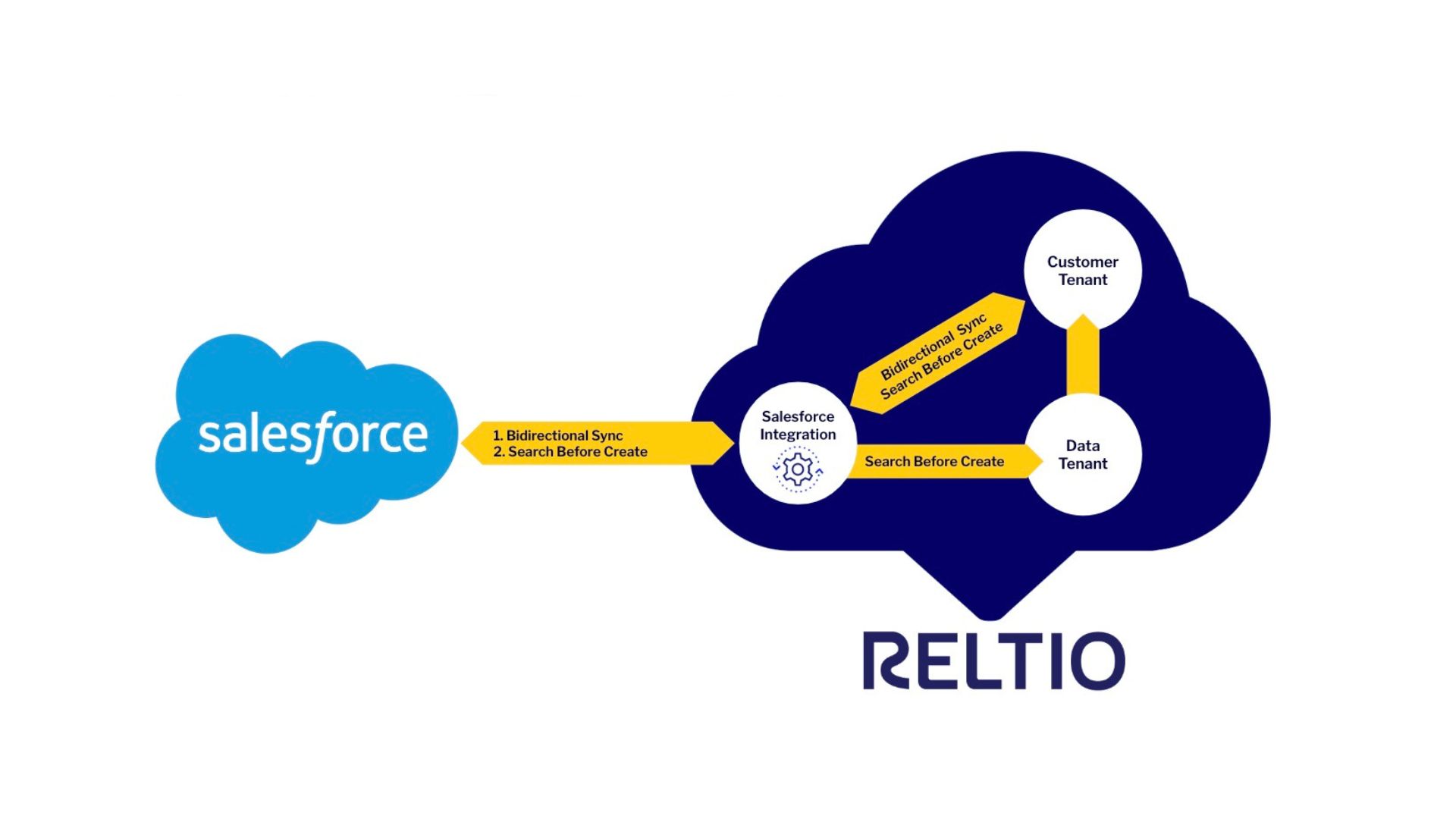
Reltio Integration for Salesforce : Search Before Create, Architecture, Configuration, and Enterprise Data Strategy

Automating Data Quality with Reltio Agentflow: A Smarter Approach to Master Data Management

From Data Mesh to Data Fabric: Choosing the Right Decentralized Architecture for Your Enterprise

Building a DataOps Culture: Accelerating Data Delivery Through Automation and Collaboration