


Why Agentic AI Demands More Than Just Smart Models
As enterprises move beyond basic generative AI tools toward “agentic AI” — autonomous agents that reason, plan, and execute tasks without constant human input — the stakes have dramatically increased. These agents promise to transform workflows: automating complex business processes, dynamically coordinating across systems, and acting much like digital employees. 1
But the successful deployment of agentic AI depends not merely on the sophistication of models, but primarily on the quality, architecture, and governance of enterprise data. Without a solid data foundation, agentic AI may behave unpredictably — producing inconsistent outputs, making poor decisions, or failing compliance and audit requirements.
To harness the benefits of agentic AI, organizations must rethink their data architecture: ensuring interoperability, governance, security, and scalability.
What Is Agentic AI — and Why It’s Different
Agentic AI refers to systems of autonomous agents capable of:
- Planning and decision-making: breaking down goals into multi-step workflows, reasoning about next actions, adapting to new information. 2
- Autonomous execution: interfacing with internal systems (databases, ERPs, CRMs, etc.), initiating actions such as updates, workflows, or cross-system orchestration. 3
- Collaboration & coordination: multiple agents (or agents + humans) working together, sharing context, and balancing autonomy with alignment to enterprise goals. 4
In 2025, analysts estimate enterprises adopting agentic AI increasingly — with agentic systems becoming core to enterprise applications rather than experimental side-projects.
However, building a robust, enterprise-ready agentic AI system is harder than launching a chatbot: it demands a purpose-built data architecture, governance, and integration.
Why Data Architecture & Governance Are Non-Negotiable for Agentic AI
1. Agents Depend on Reliable, Unified Data
Autonomous agents typically interact with multiple systems — CRM, ERP, data lakes, content repositories, third-party tools — and make decisions based on combined data. If data is scattered across silos, inconsistent in format, or stale, agent decisions become unreliable.
2. Data Integration & Interoperability: The Backbone of Multi-Agent Systems
A scalable agentic AI architecture requires seamless integration across systems. This means clean APIs, consistent metadata, unified data models, and version control — otherwise agents risk acting on outdated or contradictory information. 5
3. Governance, Compliance & Auditability
When agents execute tasks — especially those involving sensitive data (customer data, financials, personal info) — enterprises must ensure data lineage, role-based access control, audit trails, and compliance. Without governance, autonomous agents present regulatory, ethical, and operational risks.
4. Observability, Monitoring & Risk Control
Agents can behave unpredictably under changing data conditions. Data drift, schema changes, or bad inputs can cascade into flawed decisions. To manage this, enterprises need observability, monitoring, alerting — much like traditional production systems.
What an Enterprise-Ready Agentic Architecture Needs to Deliver
To fully prepare for agentic AI, organizations must design or upgrade their data architecture with several core capabilities:
- Modular, orchestration-friendly structure — the environment should support multi-agent workflows, configurable task modules, fallback pathways, and retry logic to ensure resilient execution.
- Harmonized data foundation supported by MDM and strong metadata practices — enterprises must maintain a unified source of truth for key entities (such as customers, products, assets, and more) so agents operate on accurate, consistent information.
- Controlled, secure access with strong governance and data sovereignty — this includes role-based permissions, comprehensive audit logs, data masking techniques, and adherence to regulatory mandates.
- End-to-end observability and detailed logging for agent activity — organizations need transparency into how data is consumed, which agents made decisions, and how information moved through the system to simplify debugging and auditing.
- A scalable and adaptable infrastructure (hybrid/cloud and API-first) — the platform should seamlessly integrate with legacy applications, data lakes, real-time pipelines, and the distributed network of agents.
Risks of Overlooking Data Architecture and Governance
Ignoring foundational data practices exposes enterprises to several predictable and costly issues:
- Inconsistent decisions or incorrect outputs when agents interact with conflicting, duplicated, or outdated records — such as inaccurate customer details or obsolete product data.
- Security lapses and compliance violations if agents reach sensitive information without proper authorization controls, auditability, or role segmentation.
- Breakdowns in scalability: while initial agentic AI pilots may function, adding more agents can amplify data silos and integration challenges, leading to fragmented operations and erratic agent behavior.
- Minimal transparency and limited explainability, particularly in regulated industries where auditability is essential — making it difficult to justify or trace automated decisions.
Industry research consistently shows that agentic AI initiatives often underperform not because the agent models are inadequate, but because the enterprise lacked strong data architecture and governance frameworks to support them.
How to Prepare — A Strategic Checklist for Enterprises
| What to Do | Why It Matters |
| Establish unified master data and metadata governance | Ensures agents read/write consistent, high-quality data across domains. |
| Design modular, orchestration-ready architecture | Supports multiple agents, fallback logic, and collaboration. |
| Implement access controls, audit trails, and compliance safeguards | Enables secure, compliant autonomous operations. |
| Ensure data observability, logging and monitoring | Enables detection of data drift, anomalies, and ensures explainability. |
| Build hybrid infrastructure (cloud + on-premise) with standard APIs | Provides flexibility and scalability across legacy and modern systems. |
| Adopt phased, pilot-to-scale approach with governance baked in | Reduces risk; allows incremental learning and adaptation. |
How Apptad Can Support Your Agentic AI Data-Readiness
Apptad helps enterprises establish the strong data foundations required for agentic AI by modernizing data architectures and governance frameworks. Through its data-management services, Apptad supports organizations in building AI-ready master data management (MDM) capabilities — including planning, design, configuration, data quality, and ongoing stewardship — ensuring that customer, product, supplier and other core domains remain accurate and consistent across systems (Apptad MDM Services).
Apptad also provides enterprise data governance, metadata management, and data-quality frameworks, enabling organizations to manage lineage, enforce standards, and maintain compliance across evolving AI ecosystems (Apptad Data Management). Its approach includes scalable, cloud-aligned architectures that unify data sources and eliminate silos, creating a secure, governed environment where autonomous agents can operate reliably.
By combining MDM, governance, observability, and cloud-native integration capabilities, Apptad helps enterprises build the trusted, unified, scalable data backbone required for safe and effective deployment of agentic AI systems.
Conclusion: Data Architecture & Governance — The Real Foundation of Agentic AI Success
Agentic AI offers transformative potential: autonomous decision-making, process automation, continuous learning, and operational agility. But these benefits will only materialize if built on a robust data foundation. In 2025, the shift toward agentic AI demands that enterprises rethink their data architecture: embracing master data management, metadata governance, security, observability, and scalable integration.
Organizations that invest early in these fundamentals will turn agentic AI from a pilot experiment into a reliable, enterprise-grade capability — powering smarter workflows, better decisions, and future-ready operations.
Building RDM Update Agents with Reltio AgentFlow
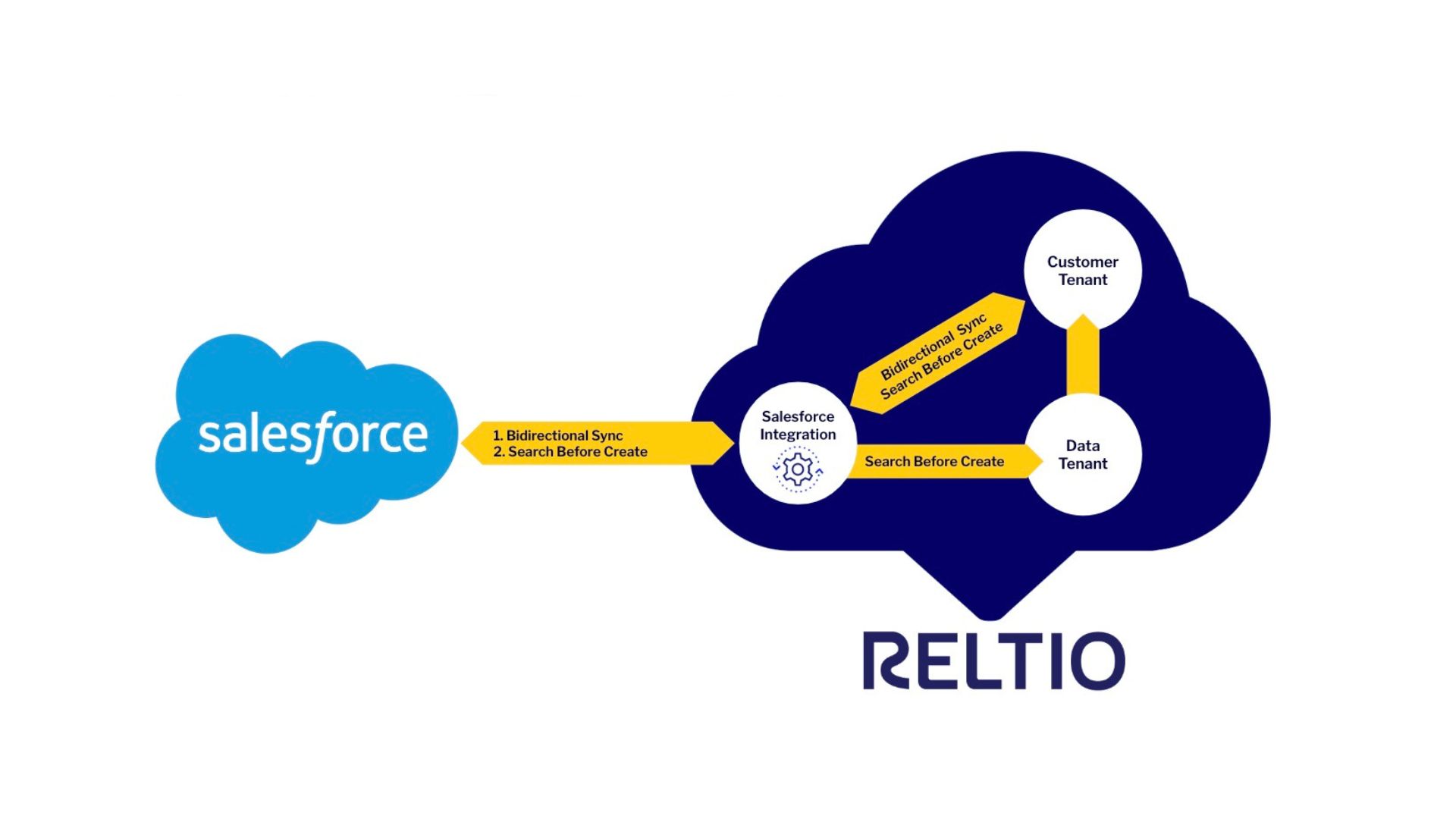
Reltio Integration for Salesforce : Search Before Create, Architecture, Configuration, and Enterprise Data Strategy

Automating Data Quality with Reltio Agentflow: A Smarter Approach to Master Data Management

From Data Mesh to Data Fabric: Choosing the Right Decentralized Architecture for Your Enterprise
Building a DataOps Culture: Accelerating Data Delivery Through Automation and Collaboration