



Executive Summary
Migrating STIBO Systems Master Data Management (STEP) from on-premises to STIBO MDM Cloud is no longer just a technical upgrade—it is a strategic modernization. The cloud unlocks benefits such as elastic scalability, faster feature adoption, reduced operational overhead, and lower TCO. However, achieving these benefits requires a structured approach rather than a simple “lift-and-shift.”
This guide provides a practitioner-level blueprint to plan and execute a migration, covering architecture, data, integrations, governance, and operational changes, with a focus on maximizing value and minimizing risk.
1. Why Move STIBO MDM to the Cloud?
Moving to a cloud-based MDM platform fundamentally changes both economics and operations:
- Cost Efficiency: Transition from capital-intensive on-premises infrastructure to subscription-based OPEX, with managed backups, disaster recovery, and monitoring.
- Agility: Elastic capacity and automated upgrades allow rapid rollout of new domains, attributes, and integrations.
- Scalability & Performance: Containerized microservices orchestrated with Kubernetes and distributed data stores ensure predictable performance under load.
- Security & Resilience: Enterprise-grade cloud security, 24/7 monitoring, and built-in DR reduce operational risk.
Real-world migrations, such as SRAM’s, demonstrate tangible gains: smoother integrations, faster system performance, and reduced IT overhead.
2. Architectural Differences: On-Prem vs Cloud
Understanding the architectural delta is essential for designing the migration.
2.1 On-Premises STEP (Pre-2024.2)
- Monolithic application servers (e.g., WebSphere) running STEP.
- Oracle database for master data and workflows.
- Optional components: Elasticsearch, InDesign/DTP servers, asset storage.
- Integrations: Batch file transfers (CSV/XML), SOAP web services, JMS queues.
- High availability achieved via server clustering and cache synchronization.
2.2 STIBO Cloud / SaaS STEP
- Microservices architecture deployed in containers across managed nodes.
- Hub Server: Centralized orchestration and authentication (federated identity with Active Directory/Entra ID).
- External services like Oracle, Elasticsearch, and InDesign are accessed via microservices.
- Cloud environment provides managed Kubernetes, logging, monitoring, and scaling, along with self-service upgrades.
This shift requires increased memory/compute resources for on-prem aligned with SaaS architecture but enables modern, cloud-native operation.
3. Migration Approaches
Organizations typically choose from three migration strategies:
- Re-host (Lift-and-Shift): Minimal redesign; replicates existing configuration in the cloud. Low transformation risk, but carries technical debt.
- Re-platform (Cloud-Optimized): Preserves core data model while modernizing integrations, identity, and operations. Balanced risk-to-benefit ratio; recommended for most organizations.
- Re-design (Transformational): Refactors domains, governance, and workflows. Aligns MDM with broader digital initiatives but requires longer timelines and higher complexity.
Most migrations favor Re-platform, balancing continuity with modernization.
4. Step-by-Step Migration Blueprint
Phase 0: Define Objectives & Business Case
Identify measurable outcomes:
- Reduced TCO and IT effort.
- Increased agility and scalability.
- Enhanced data security and governance.
- Alignment with enterprise cloud strategy.
Phase 1: Discovery & Assessment
- Inventory environments: DEV, QA, UAT, PROD.
- Assess current architecture: STEP version, custom extensions, integrations, batch jobs.
- Review data quality: Identify duplicates, integrity issues, and stewardship gaps.
- Evaluate cloud readiness: Organizational familiarity with cloud IAM, networking, and regulatory constraints.
Phase 2: Target Cloud Design
- Define cloud environments: DEV, TEST, PROD, UAT.
- Identity & access: Integrate with Entra ID/AD; map roles to cloud groups.
- Networking: Establish hybrid connectivity via VPN/ExpressRoute.
- Integration strategy: Classify each integration as retire, lift-and-shift, or modernize (REST API preferred).
- Data migration approach: Big-bang vs phased, based on complexity and business risk.
Phase 3: Cloud Provisioning & Setup
- Provision cloud environments with Stibo’s support.
- Configure tenants, system parameters, SSO, logging, and monitoring.
- Validate infrastructure sizing and microservice deployment.
Phase 4: Configuration Migration
- Migrate data model objects, business rules, workflows, UI settings, and scripts.
- Use configuration catalogs to ensure parity and validate with test cases.
Phase 5: Data Migration
- Extract, cleanse, transform, and load master data.
- Conduct trial migrations to validate volume, performance, and accuracy.
- Perform reconciliation and business validation before production.
Phase 6: Integration Cutover
- Test cloud integrations in UAT.
- Bridge hybrid file transfers with middleware or SFTP agents.
- Decide on parallel run vs hard cut, and decommission legacy endpoints post-migration.
Phase 7: User Transition & Go-Live
- Communicate new URLs, SSO changes, and UI updates.
- Train users on cloud features and workflows.
- Execute go-live with hypercare monitoring and early performance feedback.
5. Key Risks and Mitigations
- Integration complexity: Mitigate by early inventory, middleware, and dry-run testing.
- Network & identity issues: Pilot VPN/ExpressRoute and SSO integration in advance.
- Data & governance gaps: Use migration as an opportunity to improve data quality and stewardship.
- Misaligned timelines: Align STEP migration with ERP, CRM, and cloud program schedules.
6. Post-Migration Operations
- Upgrades: Leverage managed, self-service upgrades instead of infrequent big-bang updates.
- Monitoring & support: Combine Stibo’s cloud monitoring with internal checks.
- Cost optimization: Track cloud usage, batch jobs, and data retention to manage subscription costs.
7. Governance for Migration Success
A multi-disciplinary governance model ensures accountability and alignment:
- Executive Sponsor: Oversees strategy and business alignment.
- Program Manager: Manages timeline, budget, and risks.
- Solution Architect: Designs architecture and migration approach.
- Data Migration Lead: Oversees extraction, transformation, and reconciliation.
- Integration Lead: Rewires inbound/outbound systems.
- Business Data Stewards: Validate models, rules, and migrated data.
- Stibo Professional Services: Provides technical expertise and best practices.
8. Executive Migration Checklist
- Clarify objectives and business case.
- Assess current environment, data, and integrations.
- Select migration strategy (Re-host, Re-platform, Re-design).
- Design target cloud architecture.
- Engage Stibo for provisioning and setup.
- Migrate configuration.
- Execute data migration.
- Rewire and validate integrations.
- Plan and execute go-live.
- Optimize cloud operations post-migration.
9. Conclusion
Migrating STIBO MDM to the cloud is a strategic opportunity to modernize your master data foundation. With careful planning, disciplined execution, and governance, organizations can achieve:
- Improved agility and faster deployment of new domains.
- Scalable, resilient, and secure cloud-native architecture.
- Reduced operational burden and lower TCO.
- Alignment with broader digital transformations like S/4HANA and composable commerce.
A structured approach turns STEP into a truly agile MDM platform that evolves with your business needs.
10. Accelerate Your STIBO MDM Cloud Migration with Apptad
Migrating STEP to the cloud can be complex—but it doesn’t have to be risky.
Apptad provides deep expertise in MDM, ERP, and cloud migrations, helping enterprises:
- Define migration strategy and target architecture.
- Execute configuration and data migration with minimal disruption.
- Modernize integrations and enable hybrid coexistence.
- Reduce risk through structured execution and hypercare support.
Whether upgrading STEP while moving to cloud, or aligning MDM with broader digital initiatives, Apptad ensures a fast, predictable, and low-risk migration.
Start your STIBO MDM cloud journey today—partner with Apptad.
Building RDM Update Agents with Reltio AgentFlow
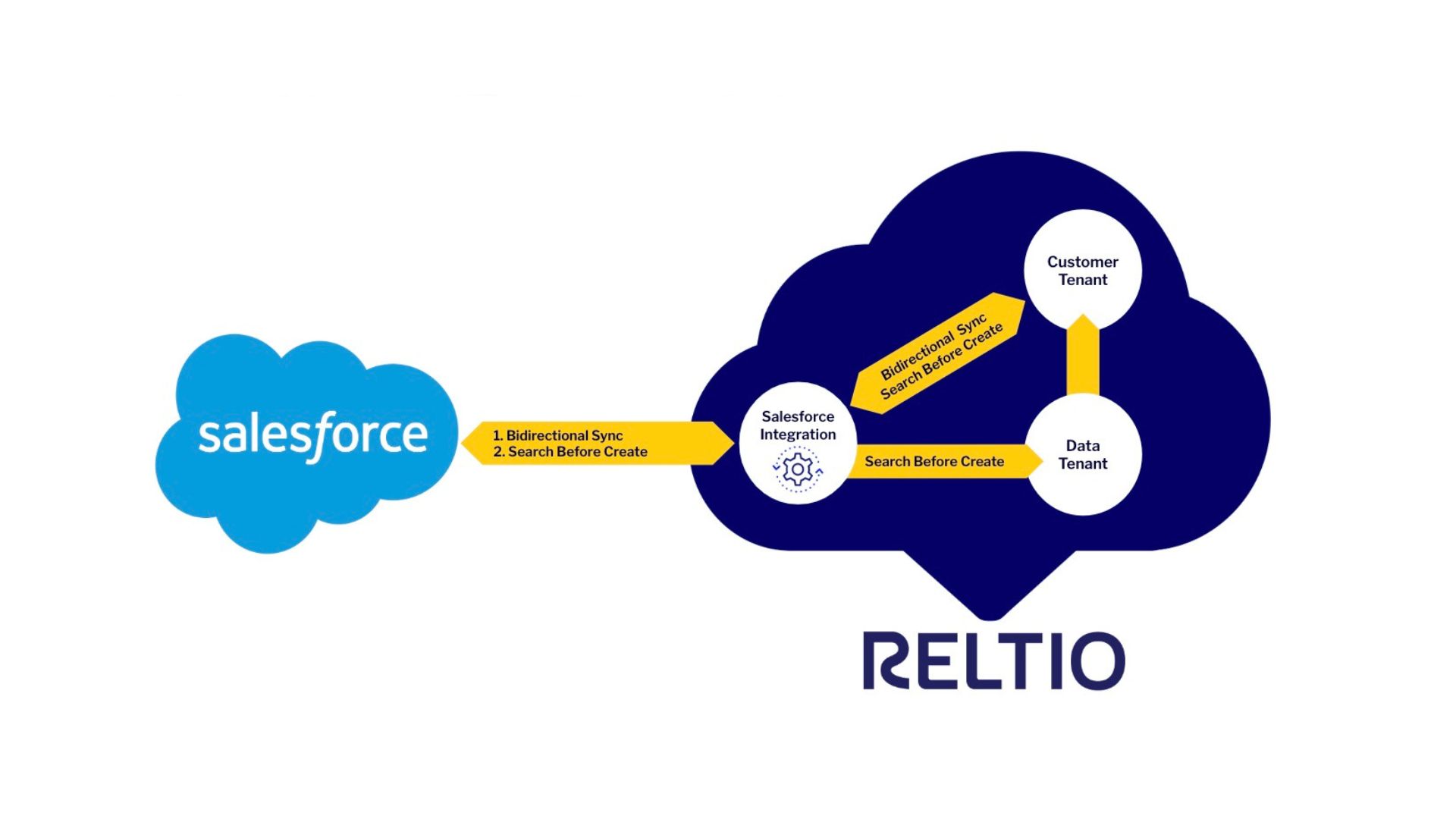
Reltio Integration for Salesforce : Search Before Create, Architecture, Configuration, and Enterprise Data Strategy

Automating Data Quality with Reltio Agentflow: A Smarter Approach to Master Data Management

From Data Mesh to Data Fabric: Choosing the Right Decentralized Architecture for Your Enterprise

Building a DataOps Culture: Accelerating Data Delivery Through Automation and Collaboration