


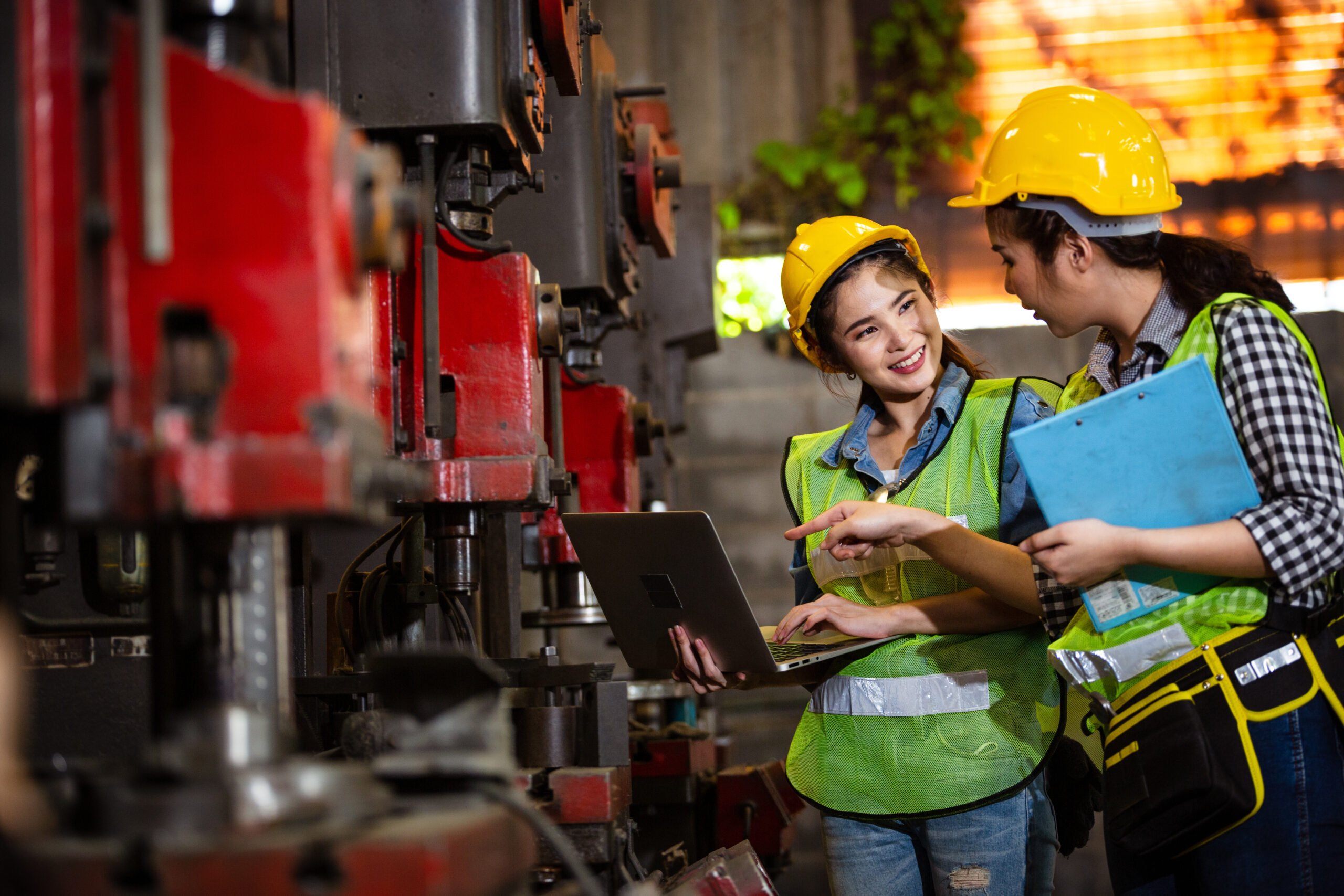
The manufacturing sector is standing at the threshold of a major inflection point. The technologies long promised under “Industry 4.0” — artificial intelligence, edge computing, digital twins, predictive maintenance, smart automation — are converging with favourable economic conditions, maturing infrastructure, and rising business urgency. 2025 is not just another year on the calendar; it is shaping up as the breakout moment when AI-driven manufacturing becomes business-critical rather than experimental.
What Makes 2025 Different
Several converging drivers make 2025 a pivotal year for large-scale AI adoption in manufacturing.
Post-pandemic stabilization meets rising demand for resilience
Global supply chains remain fragile. Market volatility, material shortages, geopolitical disruptions, and fluctuating demand patterns make predictability a rare commodity. Manufacturers have realized that lean, manual, or rigid processes no longer suffice. There is increasing pressure to build resilience, operational agility, and predictive capabilities.
Maturing industrial AI stacks & more affordable compute
Edge computing, cloud-edge hybrid architectures, optimized ML frameworks, and better hardware economics now make it feasible to run AI workloads on or near the factory floor — with acceptable latency, reliability, and scalability. According to a recent technology trends report, edge and cloud computing advances are among the top enablers of transformation in 2025. 1
Additionally, the market for edge-AI in smart manufacturing is projected to grow strongly — reflecting increasing confidence in deploying AI beyond pilots. 2
Workforce pressures and skills shortages
Many markets continue to experience labor shortages, especially for skilled operators. At the same time, demands for higher throughput, better quality, and faster turnaround force manufacturers to seek alternatives. AI-driven automation and augmentation of human work provide a strategic lever to bridge workforce gaps while improving productivity. 3
Growing maturity of AI-led manufacturing ecosystems
The ecosystem — algorithms, sensors/IoT, data platforms, edge devices, MLOps frameworks — has matured. What was once siloed experimentation is now supported by robust architectures and real-world use cases. As of 2025, many manufacturers are transitioning from isolated pilots to broader, integrated deployments. 4
Heightened focus on sustainability, efficiency, and regulation
With rising energy costs, increased regulatory scrutiny, and ESG commitments, manufacturers are under pressure to optimize energy consumption, reduce waste, and improve resource usage. AI, combined with IoT and real-time monitoring, offers a path to meet these objectives — making investment in intelligent manufacturing not just a performance play but a compliance and sustainability imperative. 5
In short: the economic, technological, regulatory, and workforce landscapes are aligning — creating a “perfect storm” for AI-driven transformation in manufacturing.
How AI is Reshaping Manufacturing Operations
Here are the key themes where AI is already driving—or poised to drive—significant impact in manufacturing operations.
Intelligent Automation & Smart Robotics
AI-powered robotics and smart automation are enabling assembly lines, warehouses, and production workflows to become more adaptive, scalable, and efficient. According to recent industrial-automation outlooks, 2025 will see broad adoption of robotics, IoT, edge computing, and AI — transforming manual and repetitive tasks into automated, intelligent operations. 6
In practice, this means flexible manufacturing lines that can adapt quickly to changes in demand, produce customized products, or switch between product variants without major downtime — offering a competitive edge in agility and responsiveness.
Predictive Maintenance & Operational Reliability
One of the clearest early wins for industrial AI is predictive maintenance. By analyzing sensor data (vibration, temperature, load, performance), AI systems can forecast potential equipment failures before they occur, reducing unplanned downtime and lowering maintenance costs.
Some manufacturers report reductions in unplanned downtime by as much as 50%, with maintenance costs dropping by 30%. 7
Quality Intelligence & Defect Detection
Quality control is being transformed through AI-driven vision systems, anomaly detection, and real-time monitoring. Defects — whether in assembly defects, micro-defects in electronics, or deviations in product quality — can be identified automatically and in real time. This reduces waste, rework, and recalls, while boosting product consistency.
Digital Twins & Simulation-Driven Optimization
Digital twins — virtual replicas of physical machinery, production lines, or even entire factories — combined with AI-driven simulation and analytics, enable manufacturers to model “what-if” scenarios, optimize throughput, plan maintenance windows, and simulate efficiency or energy-optimization measures — all without halting production.
This means changes to operations, layout, scheduling, or energy use can be tested virtually before being applied — reducing risk, improving speed of innovation, and enabling flexible manufacturing strategies.
Supply Chain & Demand Forecasting Optimization
Manufacturers with integrated AI systems can better forecast demand, optimize inventory, and coordinate supply chain logistics — reducing lead times, minimizing overstock or stockouts, and improving responsiveness to market shifts. 8
Generative AI and advanced analytics models are also being applied to simulate supply chain disruptions, optimize sourcing strategies, and dynamically adapt production planning — offering greater resilience and agility.
Energy Efficiency and Sustainability
AI-driven systems are increasingly used to monitor energy usage, resource consumption, and environmental parameters — enabling optimization for energy consumption, reducing waste, and helping meet sustainability goals.
Such capabilities are critical now, as manufacturers face both regulatory pressure and rising operational costs tied to energy and resource inefficiencies.
Workforce Augmentation and Skill Transformation
Rather than wholly replacing human workers, AI systems are being used to augment human decision-making, automate repetitive tasks, and free up skilled labor for higher-value work. Collaborative robotics (cobots), AI-driven decision support, and analytics dashboards empower operators and managers to act faster and with greater insight. 9
This transformation supports workforce upskilling, reduces dependency on repetitive manual labor, and helps address talent shortages in critical roles.
Strategic Benefits for Manufacturers
When implemented thoughtfully, AI-driven transformation delivers a broad set of strategic advantages:
- Cost Reduction: Lower maintenance costs, reduced waste, optimized energy usage, and fewer quality-related reworks.
- Increased Throughput: Smarter automation and real-time adjustments lead to higher productivity and faster fulfillment cycles.
- Operational Resilience: Predictive maintenance, supply-chain optimization, and simulation reduce risk and improve uptime.
- Speed and Agility: Faster decision cycles enabled by real-time data, adaptive scheduling, and scenario modeling.
- Improved Safety and Compliance: Automated monitoring, predictive maintenance, and AI-driven quality control enhance workplace safety and ensure regulatory or quality compliance.
- Competitive Differentiation: Manufacturers equipped with AI-powered flexibility, quality, and speed gain advantage over competitors stuck in legacy, rigid processes.
- Sustainability & ESG Compliance: Reduced energy usage, waste, and optimized resource consumption support sustainability goals — increasingly important for investors, customers, and regulators.
Challenges and What Manufacturers Must Overcome
Despite the promise, large-scale adoption is not without obstacles. Leading manufacturers moving ahead in 2025 must navigate the following:
Data Silos & OT/IT Integration
Many manufacturing sites still maintain operational technology (OT) systems that are disconnected from enterprise IT — legacy PLCs, proprietary control systems, on-prem databases — resulting in fragmented data. Integrating these with modern data platforms is a non-trivial task and often requires custom engineering.
Legacy Equipment & Technical Debt
Upgrading or retrofitting older machinery for sensor data, connectivity, or automation may require significant investment. In some cases, older equipment may not support modern data interfaces.
Skills Gaps & Change Management
AI and Data/ML teams may not have domain-specific manufacturing knowledge, while operational staff may lack data literacy. Cultural resistance, lack of change readiness, and insufficient upskilling are common roadblocks.
Model Governance, Reliability & Drift
Deploying AI models in production — especially in safety-critical manufacturing contexts — requires robust governance, monitoring, retraining, and validation. Models may drift over time; without proper controls, decisions based on flawed AI outputs could harm operations.
Security & Compliance Risks
With connected devices, edge computing, and integrated data platforms, cybersecurity becomes a critical concern. Unauthorized access, data leaks, or compromised models can disrupt operations or compromise proprietary data.
ROI Uncertainty and Investment Cost
The upfront costs — sensors, edge/computing infrastructure, integration, data engineering — can be substantial. Without careful planning and phased execution, ROI may take longer than expected, discouraging investment.
How Apptad Supports AI-Driven Transformation in Manufacturing
Apptad helps organizations strengthen their data and AI foundations through services centered on data engineering, cloud modernization, advanced analytics, and machine learning. Our teams design scalable data platforms, modernize legacy environments, and build AI-ready architectures that enable enterprises to turn operational data into actionable intelligence. By structuring pipelines, deploying analytics solutions, and supporting end-to-end digital transformation initiatives, Apptad enables manufacturers to move toward more efficient, data-driven, and resilient operations.
Conclusion: 2025 Is the Year to Lead — Not Follow
The window for industrial change is open. The confluence of technology readiness, market pressure, economic necessity, and workforce dynamics make 2025 a breakout year for AI-driven manufacturing transformation. The shift is no longer about pilot projects or proof-of-concept — it is about enterprise-wide structural change.
Manufacturers that act now — investing in data foundations, edge-cloud architectures, AI models, and governance — will be better positioned to deliver resilient operations, higher throughput, better quality, and sustainable growth. Those who wait risk falling behind in efficiency, cost structure, and competitiveness.
For senior executives — CIOs, CTOs, CDOs, plant heads, and transformation leaders — the question is not whether to adopt AI, but when and how fast.
2025 is not just another year — it is a pivotal moment. The manufacturing floor is about to get smarter, more autonomous, more resilient. The opportunity is real. The time to move is now.

Why Your AI Journey Should Start with Enterprise Core Modernization

What the EU AI Act Means for Your Data Strategy and How Apptad Can Help

From Integration to Intelligence: How Informatica Powers Trusted, AI-Ready Data

Accelerating Analytics and Machine Learning with Databricks: A Practical Playbook for Data Teams

From CDRs to Customer Insights: How Strong Data Governance Drives Smarter Telecom Operations